April 30, 2026 · 7 min read
Guinea Pig Vet Near Monterey Park and the San Gabriel Valley
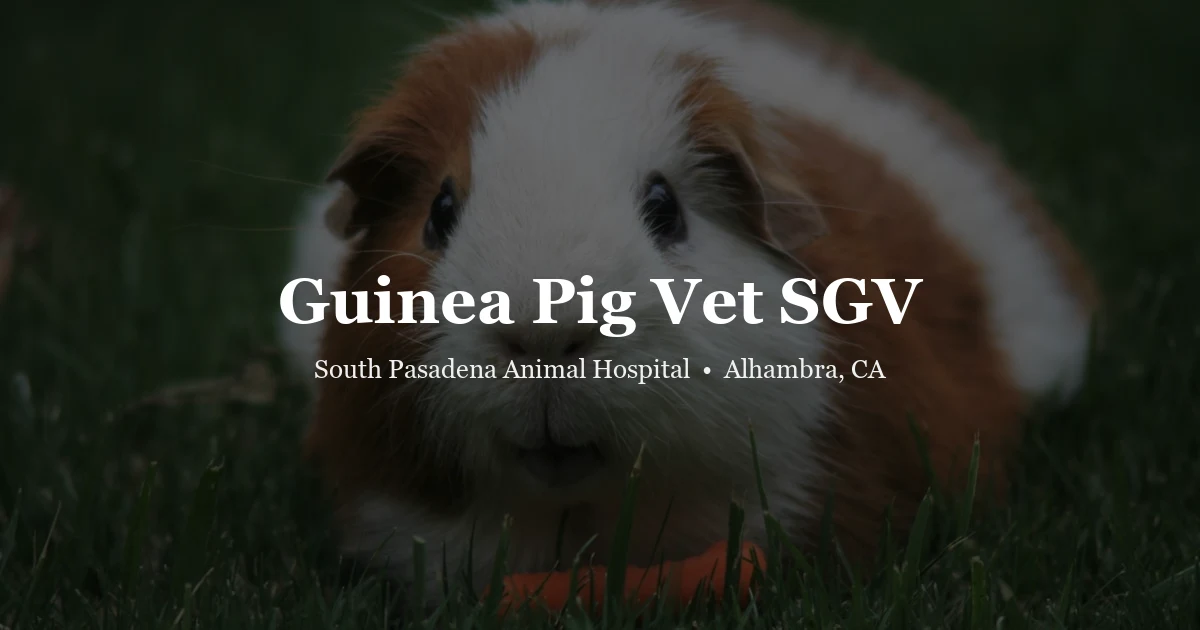
Guinea pigs are social, expressive animals with distinct personalities and a surprising range of vocalizations. They wheek, purr, and chutter. They recognize their owners. They are also, like most small exotic pets, very good at hiding illness — a survival trait inherited from prey animals that cannot afford to appear weak. By the time a guinea pig looks visibly sick to its owner, it has often been unwell for days or longer.
Most veterinary clinics in Monterey Park and the surrounding San Gabriel Valley see dogs and cats only. Finding a vet who actually sees guinea pigs regularly — and knows what normal looks like versus what needs attention — requires looking a bit further. South Pasadena Animal Hospital is at 3116 W Main St in Alhambra, approximately 8 minutes from central Monterey Park via Garvey Avenue. We see guinea pigs for wellness exams, dental disease, respiratory infections, bladder issues, and more.
Our guinea pig vet page has more on what we offer and how to book. For pricing on wellness visits and common procedures, see our pricing page.
Why guinea pigs need a vet who sees them regularly
Guinea pigs are not hamsters, and they are not small rabbits — though they share some characteristics with both. Their specific health requirements set them apart in three important ways:
Continuously growing teeth. Like rabbits, guinea pig teeth grow throughout their lifetime. Unlike rabbits, guinea pigs have a very narrow, deep mouth that makes dental assessment difficult without sedation and proper lighting. The molar teeth at the back of the mouth can develop sharp spurs — points on the edges of the teeth that grow inward and lacerate the tongue. This causes significant pain during eating and, if untreated, results in weight loss and eventually complete refusal to eat. Dental disease is the leading cause of death in pet guinea pigs, and it often progresses silently until the animal is in serious decline. Catching it early requires a vet who knows how to look for it.
Vitamin C dependency. Guinea pigs, like humans, cannot synthesize their own vitamin C. They require a daily dietary source of ascorbic acid to maintain normal tissue integrity, immune function, and wound healing. Without adequate vitamin C, guinea pigs develop scurvy — a genuinely painful condition involving joint swelling, poor coat quality, lethargy, and slow or failed wound healing. This is entirely preventable with proper diet, but it requires knowing which foods provide reliable vitamin C (and which common misconceptions to avoid, like vitamin C added to water).
GI motility similar to rabbits. Like rabbits, guinea pigs have a GI system that requires near-constant movement. They are hindgut fermenters with a diet that should be primarily hay. Disruption of gut motility can cause GI stasis — a dangerous slowdown of the digestive system — that requires prompt veterinary attention. Certain medications that are safe for dogs and cats are harmful to guinea pig gut flora, which makes knowing which antibiotics are appropriate critical.
Common guinea pig health problems we treat
Dental malocclusion and molar spurs. The back molar teeth of guinea pigs can develop uneven wear patterns that cause sharp points — spurs — to grow toward the tongue. These spurs lacerate the tongue and inner cheeks during chewing, making eating progressively more painful. Affected guinea pigs drool, drop food, lose weight gradually, and in advanced cases stop eating altogether. Treatment involves dental floating under sedation or anesthesia. This is not a one-time fix — guinea pigs with dental disease typically require ongoing dental care as the teeth continue to grow.
Upper respiratory infections. Guinea pigs are susceptible to bacterial respiratory infections, most commonly caused by Bordetella bronchiseptica and Streptococcus pneumoniae. Signs include sneezing, nasal discharge, labored breathing, and lethargy. Respiratory infections in guinea pigs can progress rapidly and should be evaluated promptly — what looks like a mild sniffle can deteriorate significantly within 24–48 hours in a small animal. Some respiratory pathogens can also be transmitted between guinea pigs and other household pets or humans in certain circumstances.
Vitamin C deficiency (scurvy). Despite being preventable, scurvy remains a common diagnosis in guinea pigs fed primarily pellets or commercial diets without sufficient fresh vegetables. Early signs include rough coat, increased lethargy, reluctance to move, and subtle swelling or tenderness around joints. More advanced deficiency causes hemorrhaging in the gums and joints, slow wound healing, and a visibly declining animal. Treatment involves vitamin C supplementation and dietary correction.
Bladder stones (uroliths). Bladder stones — mineral deposits that form in the urinary tract — are common in guinea pigs, particularly those fed high-calcium diets (such as unlimited pellets or high-calcium greens like kale). Signs include straining to urinate, blood in the urine, hunched posture, and vocalizing during urination. Diagnosis requires radiographs. Small stones may be managed medically; larger stones typically require surgical removal.
Ovarian cysts in females. Ovarian cysts are extremely common in intact female guinea pigs, affecting a significant majority by middle age. They can cause bilateral symmetrical hair loss (especially along the flanks), hormonal changes, and in some cases abdominal enlargement and discomfort. Treatment options include medical management with hormonal therapy or surgical ovariohysterectomy.
Skin mites and ringworm. Guinea pigs are prone to both sarcoptic mange mites (causing intense itching and self-trauma, particularly around the head and neck) and ringworm (a fungal infection causing circular patches of hair loss). Both are treatable but require accurate diagnosis to distinguish, as treatment differs. Stress or immune compromise often triggers mite infestations in animals that carry subclinical levels of mites.
GI issues. Soft cecotropes (a type of specialized dropping that guinea pigs should ingest directly from the anus), loose stools, bloating, and GI stasis can all occur and may indicate dietary imbalance, infection, or more serious underlying disease.
Vitamin C — why it matters and what actually works
This topic deserves its own section because misunderstanding it leads to preventable disease. Guinea pigs must consume vitamin C every day. Unlike most mammals, they lack the enzyme needed to synthesize ascorbic acid internally. The body also cannot store significant reserves — what is not consumed today cannot be borrowed from yesterday's surplus.
The most reliable daily vitamin C sources for guinea pigs are fresh vegetables. Bell peppers are exceptionally high in vitamin C — red and yellow peppers in particular contain more vitamin C by weight than most citrus fruits. Other good sources include romaine lettuce, cilantro, fresh parsley, and leafy herbs. A small portion of fresh vegetables daily provides reliable, consistent vitamin C without the need for supplementation.
Vitamin C added to water bottles does not work as a reliable source. Ascorbic acid degrades rapidly when exposed to air and light — the amount of vitamin C in a water bottle a few hours after filling is a fraction of what was added. Water-soluble vitamin C supplements are also unnecessary and potentially problematic if guinea pigs reduce their water intake because the water tastes different. Fresh food is the right answer.
What happens without enough vitamin C? Early vitamin C deficiency causes lethargy and a rough, dull coat. Joints become swollen and painful — guinea pigs with scurvy move stiffly and are reluctant to bear weight. Wounds heal slowly. The gums may bleed. In advanced deficiency, the animal deteriorates rapidly. The good news is that vitamin C deficiency is entirely reversible in early stages with dietary correction.
Annual wellness visits — why they matter for guinea pigs
Annual exams accomplish things that you cannot do at home, no matter how observant you are:
Dental assessment. The back molar teeth can only be visualized with proper lighting and equipment, often with sedation. Annual dental checks catch early spur formation before the guinea pig is in significant pain and losing weight. Early intervention is far simpler and less stressful than treating advanced dental disease.
Weight tracking. We weigh guinea pigs in grams at every visit and compare to previous records. Even small weight losses — amounts too subtle to feel when picking up a familiar animal — can signal underlying disease. A graph of weights over time is one of the most valuable health monitoring tools for a guinea pig.
Parasite screening. A fecal exam can detect internal parasites and assess gut health. Annual screening establishes what is normal for your animal.
Overall condition assessment. Lymph node size, coat quality, eye clarity, and ear condition are all assessed as part of a complete physical. These are things that change gradually and are easy to miss when you see your animal every day.
Signs your guinea pig needs to see the vet soon
The following signs should prompt a same-day or next-day call to the vet:
Signs that warrant a same-day call: gradual weight loss of even a few grams per week (significant in a small animal); drooling or a persistently wet chin (almost always dental disease affecting swallowing); difficulty eating or dropping food while chewing; labored or noisy breathing; sneezing with cloudy or thick nasal discharge especially alongside lethargy; hunched posture (guinea pigs in pain become quiet and withdrawn); sudden behavior change in a normally vocal social animal; reluctance to move or difficulty walking; blood in the urine.
If you're unsure, call us at (626) 441-1314. We can help you assess urgency over the phone and advise whether your guinea pig needs to be seen today or can wait for a scheduled appointment.
Getting to us from Monterey Park
From central Monterey Park — the Garvey Avenue corridor, Atlantic Boulevard, or the Garfield area — the most direct route to us is westbound on Garvey Avenue into Alhambra, then north to Main Street. The drive from central Monterey Park is approximately 8 minutes depending on traffic.
We are at 3116 W Main St, Alhambra, CA 91801. Parking is available directly in front of the clinic. We also serve guinea pig owners from Monterey Park, San Gabriel, Alhambra, Rosemead, and surrounding SGV communities.
To book a guinea pig wellness exam or report a health concern, use our guinea pig vet page, our contact page, or call (626) 441-1314. Our pricing page lists current fees for wellness exams and common small animal procedures.
Questions we hear often about guinea pig vet care
How often should my guinea pig see a vet?
Annual wellness exams for healthy adults; every 6 months for guinea pigs over three years. Because guinea pigs hide illness well, regular visits are how dental disease, weight changes, and other conditions are caught before they become critical. Annual exams also establish baseline weight — useful for detecting gradual loss at future visits.
How do I know if my guinea pig has dental disease?
Signs include gradual weight loss, drooling or a wet chin, difficulty picking up or chewing food, and in advanced cases, complete refusal to eat. The molar teeth causing the problem cannot be seen without sedation and proper equipment — by the time owners notice something is wrong, dental disease is often well advanced. Annual wellness visits with a vet who sees guinea pigs are the most reliable way to catch it early.
What vegetables are good sources of vitamin C for guinea pigs?
Bell peppers (especially red and yellow), romaine lettuce, cilantro, and fresh parsley are reliable daily sources. Avoid depending on vitamin C added to water — it degrades rapidly with light and air exposure. Fresh vegetables are the most consistent and effective way to meet daily vitamin C needs. Do not use citrus as a primary source, as the acidity can cause mouth sores with frequent feeding.
What should I bring to my guinea pig's first vet visit?
Bring your guinea pig in a secure, ventilated carrier with familiar bedding and some hay. A fresh fecal sample (within a few hours) is helpful for parasite screening. Previous veterinary records if available. Be ready to describe diet, enclosure setup, how long any concerning signs have been present, and any recent changes in environment. Contact us with any questions before the visit.