April 30, 2026 · 7 min read
Dog Allergies in the San Gabriel Valley: Symptoms, Causes, and When to See a Vet
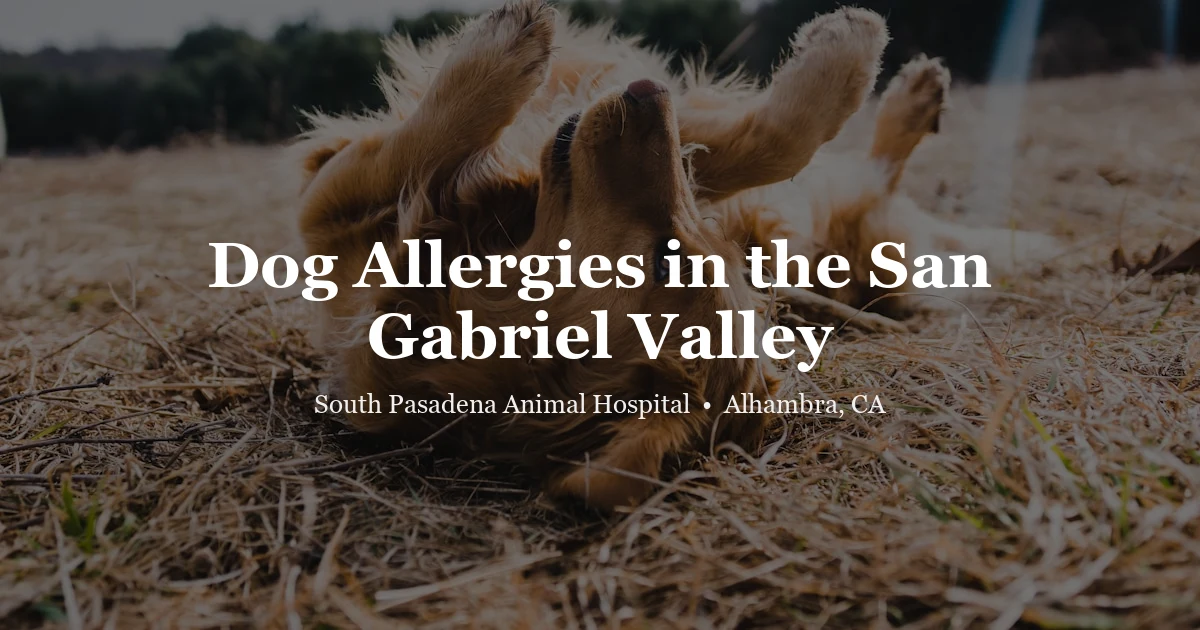
If you live in the San Gabriel Valley and your dog won't stop scratching, licking their paws, or shaking their head, you're not imagining things — and you're not alone. The SGV's climate is hard on dogs with sensitive immune systems. Year-round warmth, dry Santa Ana winds, urban dust, and a long grass-pollen season create near-constant allergen exposure. Plenty of dogs manage fine, but for those that don't, allergies become a recurring, frustrating problem that doesn't go away on its own.
Here's what's actually driving it, how to recognize it, and what treatment actually looks like — from a practice that sees this every week at our clinic on Main Street, a few minutes from San Gabriel.
Why SGV dogs deal with allergies more than dogs in other regions
Allergies in dogs work the same way as in people: the immune system misidentifies a harmless substance (pollen, dust mite proteins, certain food ingredients) as a threat and mounts an inflammatory response. The difference is that dogs show most of that inflammation in their skin and ears rather than their nose and eyes.
Southern California's climate creates a few specific problems. Bermuda grass and other warm-season grasses release pollen almost continuously from spring through fall, and in mild winters they barely stop. Dust mites thrive in warm, dry indoor environments — exactly what most SGV homes provide. Mold spores spike after any rain, which in our region tends to be infrequent but intense. And food allergies — most often triggered by proteins like chicken, beef, or dairy — layer on top of environmental sensitivities in many dogs, making it hard to tell what's causing what.
The result is a dog that seems chronically itchy without a clear seasonal pattern, because the triggers are present most of the year.
What dog allergies actually look like
The classic picture is a dog licking and chewing their paws, rubbing their face on carpet, scratching at their ears, or cycling through recurring red, irritated skin. The paws usually show reddish-brown staining between the toes — that discoloration is dried saliva, and it tells us the dog has been at it for a while. The ears are almost always involved too: recurrent infections, head shaking, odor, discharge. Groin and armpit skin is thin and makes direct allergen contact during walks. The face gets rubbed on furniture, watery discharge appears around the eyes, redness around the muzzle. The belly develops redness or darkens over time from low-grade repeated inflammation. The pattern tends to be diffuse — multiple locations, not one isolated spot.
Secondary infections are common. When dogs break the skin barrier through scratching and licking, bacteria and yeast move in. A dog with allergies often ends up being treated repeatedly for skin infections and ear infections without anyone addressing the underlying allergy — and the infections keep returning because the root cause is still there.
Environmental vs. food allergies — they're different problems
Environmental (atopic) allergies
These are triggered by inhaled or contacted allergens: grass pollen, tree pollen, dust mites, mold, cockroach proteins, and more. In the SGV, these are the most common type. Dogs with atopic dermatitis typically start showing symptoms between one and three years of age. The itching is often seasonal at first, then becomes year-round as the immune system becomes sensitized to more triggers over time.
Food allergies
True food allergies (as opposed to food intolerances, which cause GI symptoms) cause skin and ear symptoms that look identical to environmental allergies — which is why they're easy to miss. The most common culprits in dogs are chicken, beef, dairy, wheat, and eggs. Food allergies don't follow any seasonal pattern and don't improve with antihistamines. The only reliable way to diagnose a food allergy is a strict elimination diet trial — 8 to 12 weeks on a novel or hydrolyzed protein diet with nothing else — followed by a food challenge. At-home allergy tests are not a reliable substitute.
How allergies are diagnosed and treated
The first step is always ruling out other causes of itching — mange, fleas, ringworm, and bacterial skin infections can all cause similar symptoms. Once those are excluded, allergy testing becomes appropriate.
For environmental allergies, a blood test (serology) or intradermal skin test can identify which specific allergens trigger your dog's immune response. This information feeds into allergen-specific immunotherapy — a treatment program using allergy shots or sublingual drops customized to your dog's specific sensitivities. Immunotherapy is the closest thing to a long-term solution: it trains the immune system to be less reactive over months to years.
For faster symptom relief while longer-term management is established, medications like Apoquel (oclacitinib) and Cytopoint (lokivetmab) are highly effective at reducing itch in most dogs. These work differently from traditional antihistamines, which tend to have limited effectiveness in dogs. Medicated shampoos, topical sprays, and ear cleaners manage secondary infections and reduce surface allergens.
If a food allergy is suspected, a proper elimination diet trial is the next step — ideally with a prescription hydrolyzed protein or novel protein diet rather than a store-bought "limited ingredient" food, which often contains cross-contaminants.
When to come in
If your dog has been itchy for more than two weeks, has had more than one ear infection this year, or has visible skin changes (redness, thickening, hair loss, or darkening), a proper evaluation is worth doing. Allergy management works best when started before secondary infections become chronic and before the skin undergoes long-term changes from repeated inflammation.
We see a lot of dogs from San Gabriel, Alhambra, and the surrounding SGV for exactly this. Our San Gabriel area page has directions and hours. You can also book an appointment or call (626) 441-1314 to talk through what your dog is experiencing before coming in.
Questions we hear often
Why do so many dogs in Southern California have allergies?
Southern California's climate means grasses pollinate nearly year-round, and warm dry indoor environments support high dust mite populations. SGV dogs are exposed to their triggers continuously rather than seasonally, making the symptoms chronic. Food allergies can layer on top, complicating the picture further.
What does a dog allergy look like?
The most common signs are paw licking, recurring ear infections, redness in the armpits and groin, face rubbing, and skin that darkens or thickens over time. Dogs show allergies through their skin and ears far more than through nasal symptoms.
How do vets test for dog allergies?
Environmental allergies use blood panels or intradermal skin testing to identify specific triggers. Food allergies are diagnosed through a strict elimination diet trial of 8 to 12 weeks — at-home allergy tests sold online are not considered reliable for dogs.
Can dog allergies be cured?
Environmental allergies can't be cured but can be well controlled. Allergen-specific immunotherapy (allergy shots or sublingual drops) reduces the immune system's sensitivity over time and is the most effective long-term approach. Medications like Apoquel and Cytopoint provide reliable symptom relief while management is being established.
My dog keeps getting ear infections — could allergies be the cause?
Almost certainly yes, if it's happening more than once a year. Allergies inflame the skin lining the ear canal, which allows yeast and bacteria to overgrow. Treating the infection without addressing the underlying allergy means the infections will keep coming back. Book an appointment to get the full picture evaluated.