April 30, 2026 · 7 min read
Bearded Dragon Vet Near Alhambra: Reptile Care in the San Gabriel Valley
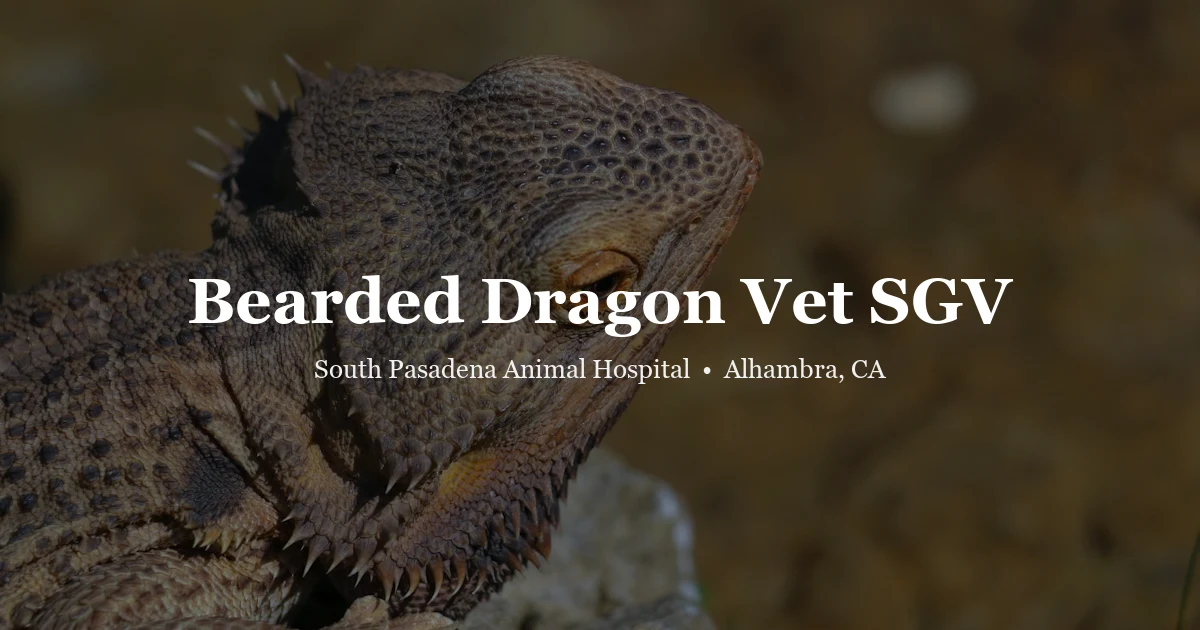
Bearded dragons have become one of the most popular reptile pets in the United States — and for good reason. They are diurnal (active during the day), relatively calm when properly socialized, and genuinely engaging to watch and interact with. But they are also one of the most frequently neglected animals from a veterinary standpoint, largely because most veterinary clinics in the San Gabriel Valley don't see them.
South Pasadena Animal Hospital sees bearded dragons and other reptiles. We are located at 3116 W Main St in Alhambra — five minutes from central Alhambra — and we offer wellness exams and in-house diagnostics for reptile patients. Our reptile vet page has details on scheduling and what to expect. This post covers the most important things bearded dragon owners in the SGV need to know.
Why bearded dragons need reptile-experienced veterinary care
Taking a bearded dragon to a vet who primarily sees dogs and cats is a bit like taking a child to a large-animal veterinarian. The biology is just different enough that the clinical picture looks completely unlike what the practitioner sees every day.
Ectothermic physiology. Bearded dragons are ectotherms — they regulate their body temperature externally rather than generating it internally. This has profound consequences for nearly every aspect of their biology. Digestion, immune function, and metabolic processes all depend on appropriate environmental temperatures. A sick bearded dragon kept at the wrong temperature will not be able to fight infection, digest food, or respond to treatment normally. Understanding this requires familiarity with reptile physiology, not just general veterinary principles.
Metabolic bone disease from improper husbandry. This is the most common serious condition we see in bearded dragons, and it is almost entirely preventable. It results from inadequate UVB lighting and/or calcium deficiency, and it progresses silently until bones become soft and deformed. Many owners don't know their setup is inadequate until their dragon is already showing signs of disease. A vet who sees reptiles regularly can assess the husbandry history and catch risk factors before clinical disease develops.
Different normal blood values. What constitutes a normal complete blood count or chemistry panel for a bearded dragon is not the same as for a dog or cat. Interpreting reptile bloodwork correctly requires familiarity with species-specific reference ranges — otherwise, abnormal findings can be missed or normal findings can be flagged as problems.
Stress in handling. Improper restraint techniques can cause significant stress to reptiles, and bearded dragons stressed by a veterinary visit can have transiently abnormal blood values and suppressed immune function for days afterward. Experienced reptile handling minimizes stress and produces more reliable exam findings.
Common bearded dragon health problems
Metabolic bone disease (MBD). Caused by insufficient UVB light and inadequate dietary calcium, MBD is the bearded dragon equivalent of rickets. The skeleton fails to calcify properly, resulting in soft, rubbery bones that deform and fracture under normal use. Early signs include limb tremors, a slightly soft jaw, and reduced activity. Advanced MBD results in visibly bowed limbs, inability to walk normally, and pathological fractures. MBD is largely preventable — but once established, it requires prolonged supportive care and correction of the husbandry that caused it.
Internal parasites (pinworms and coccidia). Bearded dragons frequently carry pinworms, which in low numbers may not cause significant disease, but in larger burdens cause weight loss, loose stools, and lethargy. Coccidia is particularly problematic in juveniles and stressed animals, causing bloody or mucoid stools and rapid weight loss. A fecal float test is a routine part of wellness care for bearded dragons.
Respiratory infections. Bacterial respiratory infections in bearded dragons present as wheezing, open-mouth breathing, nasal discharge, and lethargy. They are often triggered by husbandry issues — temperatures that are too low, humidity that is too high, or immune suppression from another stressor. Treatment involves antibiotics and correction of the environmental factors.
Mouth rot (infectious stomatitis). Stomatitis is an infection of the oral tissues, presenting as swelling, redness, and caseous (cottage-cheese-like) discharge around the gums and teeth. It can progress to involve the jawbone if untreated. Treatment includes cleaning the affected tissue, appropriate antibiotics, and addressing underlying causes.
Impaction. Bearded dragons that ingest loose particulate substrate — sand, walnut shell, or calcium sand — can develop intestinal impaction, where the ingested material forms a blockage that cannot pass. Signs include straining without defecating, hind limb weakness or dragging, and a distended, hard abdomen. Impaction is serious and can be fatal if not treated.
Atadenovirus (adenovirus). Atadenovirus — sometimes called "star gazing disease" in its neurological form — is a viral infection that affects the liver and nervous system of bearded dragons. Affected animals may show lethargy, loss of appetite, and in neurological cases, abnormal posturing with the head tilted back (star gazing). There is no cure, but supportive care can maintain quality of life.
Dysecdysis (stuck shed). Incomplete shedding — where patches of old skin remain attached, particularly around the toes, tail tip, and eye caps — can cause significant problems. Retained shed on toes and tail tips can constrict circulation and lead to necrosis. This is often a husbandry issue related to insufficient humidity during the shed cycle.
Husbandry is medicine for bearded dragons
This is worth stating plainly: most of the serious health problems we see in bearded dragons originate in the husbandry setup, not in infectious disease. Getting the environment right is not a quality-of-life bonus — it is the foundation of health.
UVB lighting. Bearded dragons require a high-output UVB light — typically a T5 HO tube-style bulb rated for desert reptiles (10.0 UVB output). This replicates the intense UV radiation of their native Australian environment and is essential for synthesizing vitamin D3 in the skin. Without adequate UVB, dietary calcium cannot be properly metabolized regardless of supplementation. UVB bulbs lose output before they burn out — most should be replaced every 6–12 months even if still visibly lit.
Temperature gradients. Bearded dragons are desert animals and require a significant thermal gradient in their enclosure. The basking spot should reach 100–110°F at the surface (measured with a temperature gun, not an ambient thermometer). The cool end of the enclosure should be 80–85°F during the day, with nighttime temps dropping to no lower than 65–70°F. Temperatures below these ranges suppress immune function and digestion.
Diet by life stage. Juvenile bearded dragons (under 12 months) should eat approximately 80% insects and 20% plant matter by volume — they are growing rapidly and need the protein. Adult bearded dragons flip this ratio: approximately 80% leafy greens and vegetables, 20% insects. Appropriate insects include dubia roaches, black soldier fly larvae, and crickets. All insects should be appropriately sized (no wider than the space between the dragon's eyes) and gut-loaded with nutritious food before feeding.
Calcium supplementation. Feeder insects should be dusted with calcium powder at most feedings. A calcium powder with vitamin D3 is appropriate if UVB lighting is borderline; calcium without D3 is fine when UVB exposure is adequate. Over-supplementation of vitamin D3 is possible and causes its own problems, so balance matters.
What a bearded dragon wellness exam involves
A bearded dragon wellness visit at SPAH includes:
- Body weight and body condition score — weight is measured in grams and compared to previous visits; body condition assesses fat stores over the tail base and behind the limbs
- Neurological reflexes — righting reflex, limb tone, response to stimuli help identify early neurological disease
- Skin, eyes, and mouth exam — looking for retained shed, abnormal coloration, eye discharge or opacities, and signs of stomatitis
- Cloaca assessment — the vent is examined for cleanliness and signs of prolapse or infection
- Palpation — the abdomen is gently palpated for masses, egg retention in females, or impaction
- Fecal float — often recommended at wellness visits to screen for parasites, particularly pinworms and coccidia
- Husbandry review — we go through the enclosure setup in detail, because most health problems trace back to UVB, temperature, or diet
When to call the vet for your bearded dragon
The following signs warrant a same-day or next-day veterinary call — not a wait-and-see approach:
- Not eating for two or more weeks — outside of brumation (seasonal torpor in winter), prolonged anorexia is a sign of illness
- Black beard combined with lethargy — a dark beard alone can be a stress response, but paired with inactivity suggests illness
- Labored or open-mouth breathing — respiratory infections can progress quickly
- Dragging or trembling limbs — a cardinal sign of metabolic bone disease or neurological problems
- Prolapse — any tissue visible prolapsing from the vent is an emergency requiring immediate veterinary attention
- Bloody or severely abnormal stool — may indicate internal parasites, infection, or intestinal damage
- Retained eye caps after shedding — can cause corneal damage if not removed correctly
Getting to us from Alhambra and surrounding areas
We are located at 3116 W Main St, Alhambra, CA 91801, on Main Street with parking directly in front. From central Alhambra, the drive is under 5 minutes. We also see reptile patients from San Gabriel, San Marino, Monterey Park, and Pasadena — most of which are within a 10–15 minute drive.
To book a reptile wellness exam or report a concern, visit our reptile vet page, use our contact page, or call (626) 441-1314. If your bearded dragon is showing urgent signs, please call rather than booking online — we can advise on urgency and timing.
Questions we hear often about bearded dragon vet care
Can any vet see my bearded dragon, or do I need a reptile vet?
Reptiles have fundamentally different physiology from dogs and cats. They are ectothermic, have different normal blood values, require different handling, and are prone to conditions like metabolic bone disease that a vet unfamiliar with reptiles may not recognize. A vet who sees reptiles regularly will provide more reliable care for a bearded dragon than one who sees them rarely.
How often should my bearded dragon see a vet?
Annual wellness exams are recommended for healthy adults. Juveniles may benefit from a visit at 6 months to review husbandry and check for parasites. Older dragons or those with known conditions should be seen every 6 months. Bearded dragons hide illness well — wellness visits often catch problems before they become visible.
What are the signs of metabolic bone disease in a bearded dragon?
Early signs include limb tremors, a soft or rubbery jaw, and lethargy. As MBD progresses, bones deform and fracture — limbs may bow, the jaw may look swollen, and the dragon may struggle to walk. MBD is preventable with proper UVB lighting and calcium supplementation, but reversing advanced cases is difficult. Contact us if you suspect MBD.
What are the signs of impaction in a bearded dragon?
Straining to defecate without producing stool, a distended or hard abdomen, hind limb weakness or dragging, and lethargy. Loose particulate substrates like sand or walnut shells are common causes. Impaction can be life-threatening — see a vet promptly if you notice these signs.