April 2, 2026 · 7 min read
Signs Your Hamster Is Sick: When to See a Vet

South Pasadena Animal Hospital — At a Glance
- Address: 3116 W Main St, Alhambra, CA 91801
- Phone: (626) 441-1314
- Hours: Mon–Fri, 8–1 & 2–6 (by appointment)
- Accepting: New patients — dogs, cats, and exotic pets
Here's the hard truth about hamsters — they're prey animals, and prey animals hide pain. It's hardwired. By the time a hamster looks visibly sick to you, there's a decent chance they've been dealing with something for days already. Sometimes longer.
We see this pattern constantly at South Pasadena Animal Hospital. Someone calls because their hamster "just started acting weird last night," and when we examine them, the problem's clearly been going on for a while. It's not the owner's fault. Hamsters are nocturnal, they're small, and they're genuinely good at pretending everything's fine until it really isn't.
So. What should you actually be watching for?
The call we get more than any other
This is one of the most common calls we get. And it's tricky — because hamsters do most of their eating at night, a lot of owners don't realize food intake has dropped until the hamster's already lost significant weight.
Think about it this way: a Syrian hamster weighs maybe 120–180 grams. A dwarf hamster? Closer to 30–50 grams. Losing even a few grams is a big deal proportionally. By the time you pick them up and think "hm, they feel lighter," they may have already lost 10–15% of their body weight.
Common mistake we see: owners check the food bowl and see food missing, so they assume the hamster is eating. But hamsters hoard. They stuff their cheek pouches and stash food all over the cage. The bowl being empty doesn't mean they actually ate it. You've got to watch the stash piles and weigh them weekly if you really want to catch this early.
If your hamster hasn't touched food or water in 24 hours, or they're losing weight even though the bowl empties on schedule, that warrants a visit. Could be dental issues, GI problems, pain from something else entirely — but a hamster that's not eating is a hamster that's going downhill fast.
The one to memorize above all others
Seeing these signs in your hamster in the Alhambra, Pasadena, or San Gabriel Valley area? South Pasadena Animal Hospital is accepting new exotic patients. Call (626) 441-1314 or book an appointment online. We're at 3116 W Main St, Alhambra — 10 minutes from Pasadena.
Okay, this is the big one. If you remember nothing else from this post, remember wet tail.
Wet tail — technically called proliferative ileitis — is probably the most dangerous common illness in hamsters. It's an intestinal infection that causes severe watery diarrhea, and it can kill a hamster within 48–72 hours. That's not an exaggeration. We've had owners call on a Monday about a hamster that seemed "a little off" over the weekend, and by the time they bring them in Tuesday morning, there's not much we can do.
What gives it away: wet, matted fur around the tail and rear end — that's where the name comes from. There's usually watery diarrhea with a strong smell, a hunched posture, a hamster that's gone lethargic and stopped moving much, and irritability if you try to handle them. They're also off food and water. Young hamsters (under 12 weeks) and recently rehomed hamsters are most at risk. The stress of moving to a new home, a new cage, new smells — it can trigger the whole thing. Pet store hamsters are especially vulnerable because of the stress of that environment.

Do not wait on this one. Don't try home remedies. Don't Google "wet tail cure." Call us or get to a vet that sees small mammals that same day. With aggressive treatment — fluids, antibiotics, supportive care — a lot of hamsters pull through. But the window is tight.
What's usually sitting in the cage causing it
Respiratory infections are really common in hamsters, and a lot of the time the cause is sitting right there in the cage.
Cedar and pine shavings are a frequent culprit we see. The aromatic oils in those woods irritate the respiratory tract, and over time that irritation can turn into a full-blown infection. Dusty bedding in general is a problem. We always recommend paper-based bedding — Carefresh, clean paper shreds, that kind of thing.
Occasional sneezes don't worry us. Sneezing all day does. So do wheezing or clicking sounds while they breathe, discharge from the nose or eyes, or sides visibly heaving with the effort of breathing. One of those alone might be nothing — two or three together, and we want to see the hamster.
Also worth mentioning: hamster cages near windows or air vents can cause drafts that make respiratory issues worse. Here in the San Gabriel Valley, a lot of homes run AC hard during summer, and if the cage is in the path of a vent, that constant cool air blowing on them is not great. Room temperature should stay between 65–75°F, and keep the cage away from direct drafts.
Mild sneezing with no other symptoms? Switch the bedding first and give it a couple days. But if there's discharge, labored breathing, or they're also not eating — come in. Respiratory infections in hamsters can get serious quickly.
Bald patches are never just cosmetic
Bald patches on a hamster are never just cosmetic. Something's going on.
Demodex mites are the most common cause we see — patchy hair loss, flaky or crusty skin, sometimes more scratching than usual. They're often too small to spot by eye, so we'll do a skin scrape to confirm. Ringworm is the other usual suspect: circular bald patches, sometimes with redness around the edges. In older hamsters, past about 1.5 years, hair loss along the flanks and belly paired with drinking and urinating more than normal points toward Cushing's disease — too much cortisol in the system. And sometimes it's nothing medical at all: a hamster rubbing against cage bars, or one half of a pair barber-chewing the other's fur.

One thing we tell people — don't buy over-the-counter mite treatments without a diagnosis. The wrong product, or the wrong dose for a tiny animal, can do more harm than good.
Most lumps aren't cancer, but check anyway
If you feel a lump on your hamster, don't panic — but don't ignore it either.
Abscesses are really common. A bite wound, a scratch from a sharp cage edge, a poke from a hay stalk — these can all turn into pus-filled lumps pretty quickly. Abscesses usually feel warm, and they tend to grow fast over a few days. Most of the time we can drain and flush them, prescribe some antibiotics, and they resolve.
But lumps in older hamsters (over about 18 months) are more concerning. Tumors — both benign and malignant — are unfortunately pretty common in aging hamsters. The hamster lifespan is short, and their cells just tend to go haywire as they age. We see mammary tumors, skin tumors, and internal masses regularly.
Not every lump is cancer. But the only way to know is to have it looked at. Smaller lumps are easier to deal with than bigger ones, so sooner is better.
The hamster who wants to eat but can't
Hamster teeth grow continuously — their whole lives. Normally, the upper and lower incisors wear each other down through gnawing and chewing. But sometimes things go wrong. A tooth grows crooked, or there's a misalignment (malocclusion), and suddenly the teeth aren't wearing properly.
Watch for drooling or a wet chin, food dropped after the hamster shows interest in it, weight loss, or teeth that look visibly long, curved, or uneven when you check gently. This is one where owners sometimes don't connect the dots. They see their hamster approach the food bowl, sit there, and walk away — and think it's being picky. Really, the hamster wants to eat but can't. Overgrown teeth can grow into the cheek, the palate, or curl outward and prevent the mouth from closing properly.
We can trim teeth pretty quickly in-clinic. Some hamsters need it done once and they're fine; others need regular trims every few weeks if the malocclusion is permanent. Either way, it's a lot better than starving.
Trust the instinct that something's different
You know your hamster better than we do. So when you notice something's different — trust that instinct.
A normally sweet hamster who suddenly nips or bites when you reach in is usually defending pain, not turning mean. A wheel enthusiast who just stops running is a red flag — could be pain, weakness, illness. Hamsters are most active at dusk and overnight, so one sleeping straight through those hours and hard to rouse deserves attention. Circling or a head tilt can point to an inner ear infection or, less often, something neurological — that one's always worth a visit.
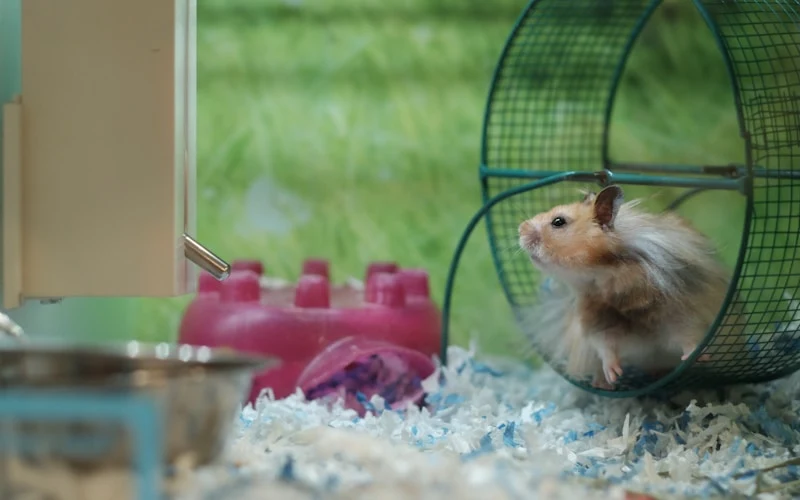
A lot of hamster owners second-guess themselves — "Am I overreacting? It's just a hamster." You're not overreacting. Changes in behavior are how these animals tell you something's wrong, and catching it early genuinely makes a difference in outcomes.
When to Wait vs. When to Come In
Not every twitch warrants an emergency visit. But hamsters are small enough that "a day or two" genuinely matters for certain conditions. Here's how to think about it:
Mild sneezing with no discharge, no labored breathing, still eating? Switch the bedding, give it 48 hours, watch. A small bald patch with no redness or scratching? Document it, monitor it. Slightly less active but otherwise normal? Same — watch for 24 hours before worrying.
Come in within 1–2 days for: not eating more than 24 hours, visible weight loss, sneezing with discharge, a new lump that appeared fast, drooling or difficulty eating, or hair loss that's actively spreading.
Come in today — meaning today, not tomorrow — if you're seeing any wet tail signs (diarrhea + wet rear + lethargy). Also: labored or open-mouth breathing, bleeding, any kind of trauma (dropped, stepped on, grabbed by another pet), a hamster that's limp or won't rouse, or seizures and head tilt with balance loss. These are not watch-and-wait situations. With wet tail especially, hours matter.
What Happens at a Hamster Vet Visit
If you've never brought a hamster to the vet before, here's what to expect so it's not a mystery:
First — transport. Bring them in their regular cage if it's small enough, or use a small, secure carrier with some of their own bedding in it. Familiar smells help keep stress down. Don't use a cardboard box (they'll chew out). Avoid leaving them in a hot car, even for a minute — SoCal heat can be brutal, and hamsters overheat easily.
We start with a physical exam — weight, body condition, teeth, eyes, ears, skin, a gentle palpation of the belly. With an animal this small, a lot of it comes down to careful observation rather than equipment. We'll ask about diet, bedding, cage setup, and anything you've noticed recently; if you caught the behavior on video, bring your phone, it genuinely helps. From there, depending on what we find, we might run a skin scrape for mites, a fecal test for parasites, or recommend imaging — bloodwork is possible but trickier on something this small. Then we walk through the options and what they cost, no pressure either way.
The whole visit is usually pretty quick. Hamsters stress easily, so we try to be efficient. You can check our vet visit prices for exam costs.
Taking Care of a Tiny Patient
Hamsters don't live long — two to three years for most species. That's just the reality. But within that time, there's a lot you can do to keep them healthy and catch problems before they spiral.
Weigh them weekly. Use paper-based bedding. Keep the cage in a draft-free spot between 65–75°F. Provide chew toys for dental health. And when something seems off, don't talk yourself out of calling. We'd genuinely rather see your hamster for something that turns out to be minor than have you wait until it's an emergency.
We see hamsters, guinea pigs, rabbits, and other small mammals at our Alhambra clinic. Visit our hamster vet page for more information, or give us a call — we're happy to take a look.
Frequently Asked Questions
How do I tell if my hamster is just sleeping or actually sick?
Hamsters are nocturnal, so a hamster that's curled up and unresponsive during the day is often just sleeping deeply — that's normal. What's not normal is a hamster that won't wake up with gentle handling, feels limp, or doesn't perk up at feeding time even after a few minutes. If your hamster seems unusually hard to rouse or floppy when picked up, that's worth a call to your vet.
What does wet tail look like, and why is it such an emergency?
Wet tail shows up as diarrhea, a damp or matted rear end, a hunched posture, and a hamster that suddenly seems lethargic or withdrawn. It can come on fast — sometimes within a day — and tends to hit younger hamsters hardest. Because dehydration can progress quickly in such a small animal, this is one of the few hamster issues where we'd say come in the same day rather than waiting to see how things go.
Is it normal for hamsters to lose some fur?
A little thinning, especially around the cheeks from burrowing or rubbing on cage bars, can be normal. What we watch for is hair loss paired with redness, scabbing, scratching, or fur that's actively spreading to new areas — those can be signs of mites, fungal infection, or another underlying issue that may benefit from a vet visit.
Can I treat my hamster's illness at home?
Supportive care — a quiet, draft-free space, fresh water, and familiar bedding — can help your hamster stay comfortable while you figure out next steps. But hamsters hide illness well and can decline quickly, so we don't recommend trying to diagnose or medicate at home. If something seems off, the safest move is to have your veterinarian take a look and guide you on treatment.
How much does a hamster vet visit cost?
Cost depends on the exam and any diagnostics your hamster needs, like a skin scrape or fecal test. You can check our pricing page for current exam fees, or call us at (626) 441-1314 and we're happy to talk through what a visit might involve for your hamster's specific symptoms. Hamsters are part of our everyday caseload as an exotic vet near the San Gabriel Valley — not an animal we see once in a while.