March 31, 2026 · 7 min read
Guinea Pig Sneezing: When to Worry and When It's Normal
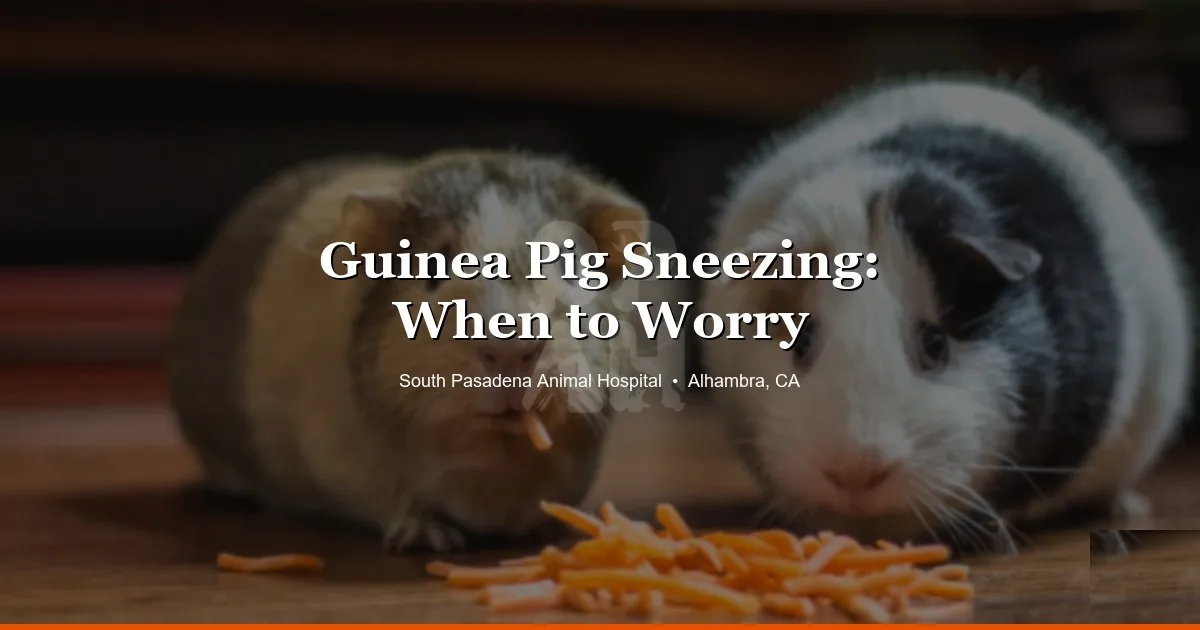
If you're Googling "guinea pig sneezing" at 11pm, you're probably trying to figure out if you need to panic or not. Short answer: probably not — but it depends on what else is going on.
Guinea pigs sneeze. They just do. A little "achoo" from hay dust or a strong smell is totally normal. But when the sneezing gets frequent — or you start noticing discharge, weird breathing, or your pig not eating — that's a different story. Upper respiratory infections in guinea pigs can go south fast, and we see enough of them at SPAH to know that waiting too long usually makes things harder.
Normal Sneezing (Don't Worry About This)
Guinea pigs have sensitive little noses. Dusty hay sets them off — timothy hay can be surprisingly dusty depending on the brand. So do cleaning products and strong scents like candles or perfume; they're more sensitive to this than people expect. Dry air from AC or heaters does it too, which is common in SoCal homes that run the AC constantly. And sometimes it's just a random irritant, the same way we sneeze for no obvious reason.
If your guinea pig sneezes a few times, eats normally, and is still wheek-ing at you when you open the fridge? They're fine. Don't stress it.
When It's More Than Just a Sneeze
Here's what actually concerns us: sneezing constantly, multiple times an hour rather than once in a while. Nasal discharge that starts clear and might turn thick or yellow-green. Crusty or watery eyes. Noisy breathing — clicking, crackling, wheezing — and if you can hear it from across the room, that's not okay. Not eating is always a red flag in this species. Hiding more and skipping the usual wheek for food means they don't feel well. And a hunched, puffed-out posture rounds out the list.
Any combination of these and we'd want to see them. URIs in guinea pigs can turn into pneumonia within days — it moves faster than most owners expect.
What Actually Causes URIs in Guinea Pigs
Most of the time it's bacterial — Bordetella bronchiseptica and Streptococcus pneumoniae are the usual culprits. A few things make guinea pigs more likely to get sick in the first place. Poor cage ventilation is common — a lot of owners use aquarium-style tanks thinking they're protecting their pig, but the airflow is terrible. Cold or drafty rooms, anything under 65°F, are too cold for them. Stress from overcrowding, a new cage mate, or a big environment change plays a role. Vitamin C deficiency tanks their immune system, since guinea pigs can't make their own — we ask about this at nearly every visit. And living with rabbits is a risk we flag constantly, since Bordetella can jump between the two species; we always recommend housing them separately.
Can a URI Actually Kill a Guinea Pig?
Yes. And it happens more often than people think. Guinea pigs are prey animals, which means they instinctively hide when they're sick. By the time an owner notices something is clearly wrong, the infection has often been building for a while already.
We've had owners bring in guinea pigs thinking it was just a little cold, and on exam the lungs already sound rough. That's not to scare you — it's just why we always say come in sooner rather than later with respiratory stuff. A few days of the right antibiotics early on can save you a lot of worry.
How We Diagnose and Treat It
When you bring in a sneezy guinea pig, we listen to the lungs first — a stethoscope tells us a lot about whether infection has reached the lower airways. We check weight and discharge, since weight loss is a strong indicator of how long this has been building. And if the infection is severe or keeps recurring, we'll run a culture so we know exactly which bacteria we're dealing with.
Treatment is usually antibiotics, sometimes anti-inflammatories for comfort, and in worse cases nebulization or syringe feeding if they've stopped eating.
One thing we always want to emphasize: not all antibiotics are safe for guinea pigs. Some that are perfectly fine for dogs and cats can be fatal to guinea pigs — they destroy the gut flora these guys depend on. Never give your guinea pig leftover meds from another pet. This is a case where seeing a vet who regularly treats guinea pigs actually matters. At SPAH, we see guinea pigs all the time and know which medications are safe.
Keeping Their Lungs Healthy
Most of prevention comes down to their living environment. Dust-free, paper-based bedding like Carefresh is what we recommend — cedar and pine shavings have oils that irritate the respiratory tract, and we see this one a lot. Keep the cage clean: spot clean daily, full bedding swap weekly, since ammonia buildup from urine is a real irritant. Good airflow matters, but without direct drafts — open-top C&C cages tend to handle this well. Room temp should stay between 65 and 75°F; in SoCal, the bigger risk is usually AC overcorrecting rather than the weather itself. Daily vitamin C is non-negotiable, and bell peppers are the easiest source — a few slices does it. Skip the vitamin C water-bottle drops; they break down within hours and we don't recommend relying on them. Quarantine new guinea pigs for 2 to 3 weeks before introducing them to your existing pigs. Don't house guinea pigs with rabbits, given the Bordetella transmission risk. And annual wellness exams let us catch things early and confirm their weight is tracking right.
When to Actually Come In
Here's our honest guide. Just sneezing, acting normal, eating fine? Monitor for a day or two and check bedding, hay dust, and nearby scents. Sneezing plus discharge, noisy breathing, or appetite changes? Come in — don't wait on this. Haven't eaten in 12+ hours? That's urgent on its own, since guinea pigs need to eat constantly and a slowed gut becomes its own problem layered on top of whatever's causing the sneezing. Losing weight fast or completely withdrawn? Same answer — come in as soon as you can.
Check our pricing page so you know what to expect cost-wise before the visit.
A sneeze here and there is just guinea pig life. But when it comes with other symptoms — or when your gut tells you something's off — trust that instinct. We'd always rather see a guinea pig early and say "they're fine" than see one late and have to play catch-up. We see guinea pigs and other small mammals at our Alhambra guinea pig clinic, and if you're weighing up your options, here's what we offer as an exotic vet near you. We're here if you need us.