May 8, 2026 · 7 min read
Why Is My Cat Not Eating? Common Causes and When It's a Problem
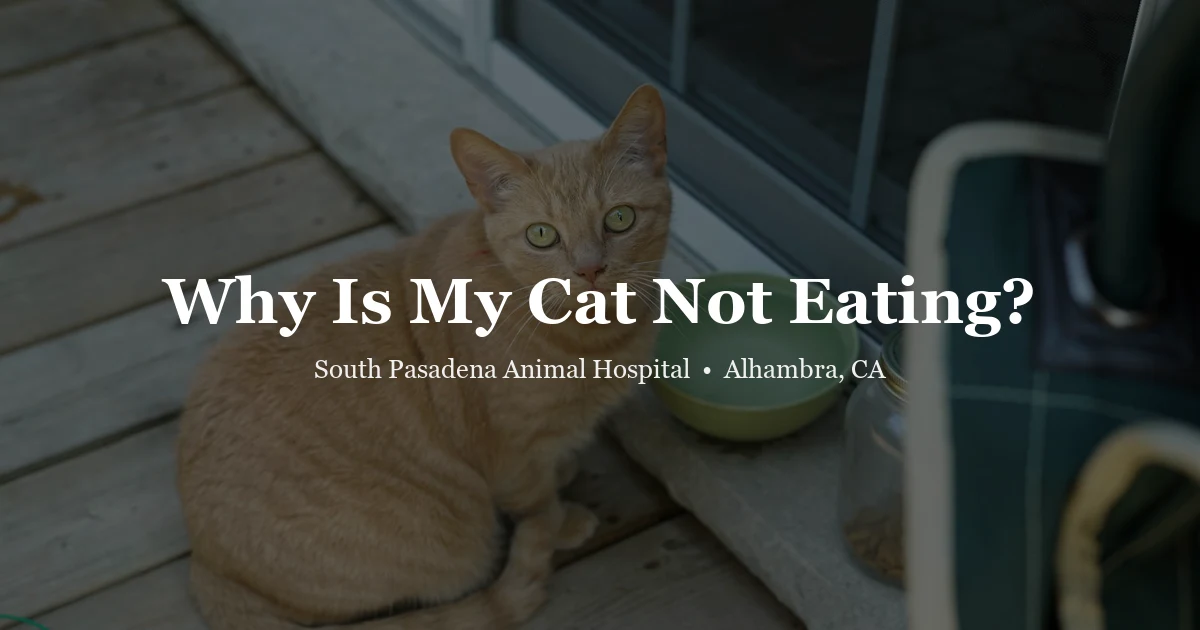
A cat that skips a meal isn't always an emergency. But a cat that hasn't eaten in 48 hours? That's a problem we take seriously. Cats are one of the few animals where not eating for even a few days can trigger a life-threatening complication — fatty liver disease — and it can happen faster than most owners realize.
We see a lot of cats at our Alhambra cat clinic with reduced or absent appetite. It's one of the most common concerns owners bring in. Sometimes the cause is simple. Sometimes it isn't. Here's how to think through it.
The danger of "she'll eat when she's hungry"
This is the most common mistake we see. Dogs can miss meals and recover fine — they're more metabolically flexible. Cats aren't. When a cat stops eating, the body rapidly starts pulling stored fat to use as energy. But cat livers aren't built to process large amounts of fat efficiently, and the liver can become overwhelmed within days. This is hepatic lipidosis. It's treatable if caught early. Left alone, it's fatal.
This is especially true for overweight cats. More stored fat = faster progression. If your overweight cat hasn't eaten in 24–36 hours, that's a call us now situation, not a "let's wait and see."
What we actually look for first
The first question is always whether anything changed. Cats are sensitive to their environment in a way that genuinely surprises people — a new pet in the home, a houseguest, furniture moved to a new spot, a different brand of litter, construction on the block. We see this regularly in SGV households that bring home a second pet and find the resident cat staging a quiet protest. Stress-related appetite loss usually passes within 24–48 hours once the stressor resolves. The cat is otherwise acting fine — no vomiting, no hiding, normal energy. Reasonable to watch. But the clock starts the moment they stop eating, so don't let "watching" stretch past a day.
Food itself is sometimes the answer. Cats are genuinely suspicious of new things, and an abrupt food switch can cause a flat refusal that has nothing to do with illness. One thing we find owners often don't know: cats develop very specific texture preferences. A pâté cat may not recognize chunked food as food at all — same calories, same protein, different presentation. We're not joking. Transition new food slowly, about a week of gradual mixing, and the reaction is usually much better.
The mouth gets missed more than anything else. A cat with dental pain — sore teeth, inflamed gums, a resorptive lesion — doesn't usually yowl or paw at their face. They just quietly stop eating, or eat less than before. By the time we see them, it's often been going on for weeks. A dental exam is one of the first things we check on any cat with appetite changes, especially one over four or five years old.
Congestion is a surprisingly common cause in our area. Cats eat almost entirely by smell, and when they're stuffed up — sneezing, eye discharge, stuffy nose — they can't smell their food and won't eat it. You'll often see them walk to the bowl, sniff, and walk away. That's not a food problem. URI infections circulate through the SGV in winter and spring; warming the food slightly helps release aroma, but if respiratory signs are present, they need treatment.
Beyond the obvious: nausea kills appetite in cats the same way it does in people. If the cat is drooling, repeatedly swallowing, or crouching over the bowl and then retreating — that's nausea presenting itself. Pain anywhere in the body has the same effect; a cat dealing with joint discomfort, a bladder issue, or an injury may reduce food intake as a first and quiet signal that something's wrong. And in cats over 10, appetite changes with no obvious environmental explanation almost always warrant bloodwork. Systemic conditions — things that show up on bloodwork — often affect how a cat feels around food before any other symptoms are obvious. That's what regular senior bloodwork is designed to catch.
Common owner mistakes
Waiting too long. "She's a picky eater" is real — but it's also a reason people delay getting a cat checked when something is actually wrong. If the behavior is new or different from their normal pickiness, that matters.
Rotating too many foods. We've seen owners try eight different foods in 48 hours trying to find something the cat will eat. That's not wrong exactly, but it can make the situation harder to sort out. A simpler approach: offer a very small amount of something highly appealing (rotisserie chicken, tuna in water — just a teaspoon), and if the cat still won't eat, call us.
Assuming the cat is "making a point." Cats don't strategically withhold eating as a negotiating tactic. If your cat isn't eating, they either don't feel well, or something in their environment has genuinely changed. Take it at face value.
When to wait vs. when to come in
Monitor at home if: The cat skipped one meal but is otherwise acting normal. You can identify a clear, recent change (new food, new pet, houseguest arrived). The cat sniffed the food and walked away but shows interest in treats or other items. No vomiting, no lethargy, no hiding.
Call us if: The cat hasn't eaten for 24–36 hours. The cat is also vomiting, lethargic, or hiding. The cat is overweight (faster risk of hepatic lipidosis). You can't identify any clear cause. The appetite drop is a change from the cat's normal baseline.
Come in now if: No food for 48+ hours. The cat is visibly weak, jaundiced (yellow tinge to gums or eyes), or drooling excessively. You suspect the cat swallowed something it shouldn't have.
What we look for at the vet visit
A thorough physical exam is the starting point — checking body weight, hydration, lymph nodes, abdomen (feel for pain or masses), mouth (dental exam), and overall body condition. Depending on what we find, we'll likely recommend bloodwork and urinalysis to look at organ function, CBC, and other markers.
Sometimes the answer is obvious on physical exam — a painful molar, a distended bladder, a respiratory infection. Sometimes bloodwork is what tells the story. Either way, we're not guessing. We're working through it systematically.
We see cats at South Pasadena Animal Hospital in Alhambra. If you have a new kitten, visit our kitten vet page for first-year care info. Call (626) 441-1314, check our pricing page, or book online.
Frequently Asked Questions
How long can a cat go without eating?
No more than 24–48 hours safely, and less for overweight cats. After 2–3 days without food, cats risk hepatic lipidosis — a serious liver condition. Don't wait past the 48-hour mark before calling a vet.
Why did my cat suddenly stop eating?
Most sudden changes in appetite trace back to stress, a change in food or environment, a respiratory infection affecting smell, dental pain, or the beginning of an underlying illness. If it's sudden and unexplained, a vet visit makes sense within 24–36 hours.
Can stress cause a cat to stop eating?
Yes, very much so. New pets, guests, construction, moving furniture — all of these can trigger appetite loss in cats. Usually resolves within 24–48 hours if the stressor passes. If it persists, have them seen.
Can dental pain cause appetite loss in cats?
Absolutely. Cats with dental disease often don't cry or paw at their face — they just quietly stop eating, or eat less. Dental issues are frequently missed because the signs are so subtle. A dental exam as part of a wellness visit catches this regularly.
What is hepatic lipidosis in cats?
Hepatic lipidosis (fatty liver disease) develops when a cat goes without eating for more than 2–3 days. The liver gets overwhelmed trying to process stored fat as fuel. It's serious but treatable when caught early. Overweight cats are at the highest risk.