May 8, 2026 · 8 min read
Blue-Tongued Skink Care: Enclosure, Diet, Health & Vet Needs
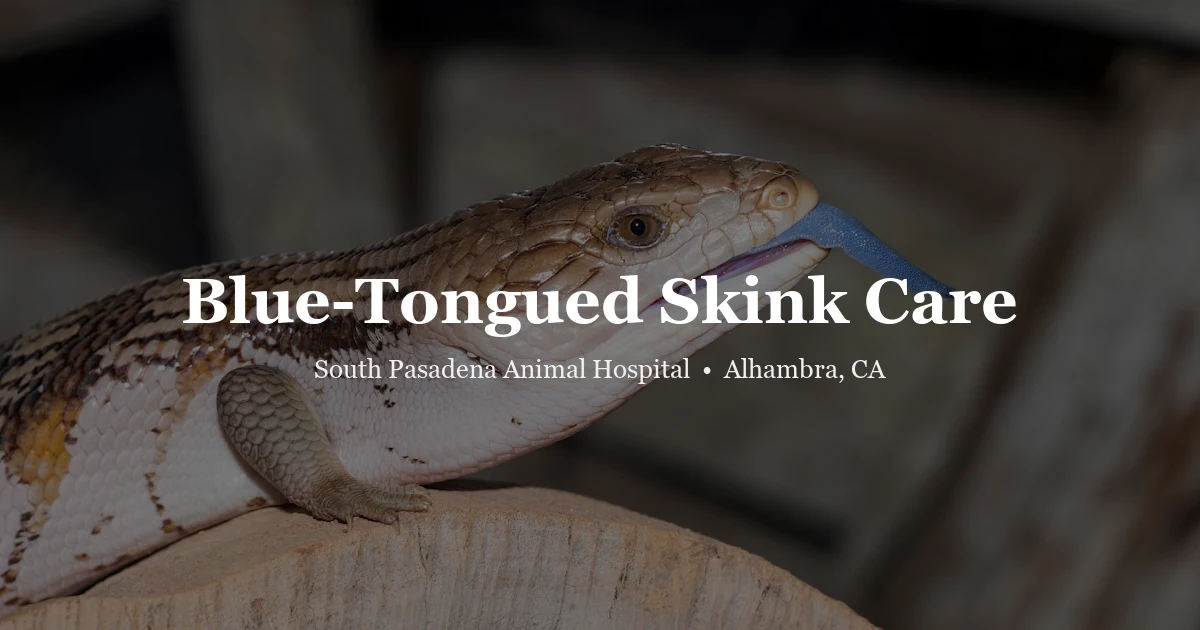
Blue-tongued skinks are one of the best large lizard pets — and in our opinion at our Alhambra clinic, genuinely underrated compared to bearded dragons. They're stocky, calm, curious, and tend to tolerate handling remarkably well. They're also omnivores, which makes feeding more interesting (and more varied) than strictly insectivore or herbivore species.
They do come with specific needs. The most common problems we see — retained shed, respiratory infections, metabolic bone disease — all trace back to husbandry gaps that are easy to avoid once you know what they are.
Species overview
Several species are kept as pets; care is broadly similar but not identical. The Northern blue-tongued skink (Tiliqua scincoides intermedia) is the most common in the pet trade — large, robust, generally calm and easy to tame. Indonesian species (T. gigas complex) have slightly higher humidity requirements. Merauke skinks are large and active and need more space. Blotched skinks (T. nigrolutea) come from cooler parts of Australia and have different temperature requirements. This guide focuses on Northern and Indonesian types, which make up the majority of what we see in SGV homes.
This guide focuses primarily on Northern and Indonesian types, which account for the majority of the pet trade.
Enclosure
Adult blue-tongued skinks need at minimum a 4'x2' enclosure (a 120-gallon or equivalent). These are ground-dwelling lizards — they need horizontal floor space, not height. A 4'x2' footprint is the functional minimum; 5'x2' or 6'x2' is better.
Substrate: blue-tongued skinks burrow and need a loose substrate that holds tunnels — at least 4–6 inches deep. Organic topsoil mixed with play sand (60/40) is excellent for moisture retention and allows natural burrowing. Coconut coir mixes well with topsoil and holds humidity. Cypress mulch works for lower-humidity setups. They spend a lot of time half-buried — this is normal behavior, not illness.
Depth: 4–6 inches minimum so the skink can actually burrow. They spend a lot of time half-buried — this is normal behavior, not illness.
Hides
Provide at least two hides — one on the warm end, one on the cool end. Blue-tongued skinks spend a significant portion of the day in hides. A humid hide (packed with damp sphagnum moss) is especially useful during shedding periods.
Temperature
Blue-tongued skinks need a strong basking spot and a clear thermal gradient. Basking surface temperature: 100–105°F measured at substrate level under the bulb, not air temperature. Warm side ambient: 85–90°F. Cool side: 75–80°F. Nighttime drop to 70–75°F is fine. The basking surface matters — put a flat piece of slate or tile under the basking bulb; skinks thermoregulate through belly contact with hot surfaces, not just from warm air above them.
The basking surface matters. Place a flat piece of slate, tile, or a large flat rock under the basking bulb. Skinks thermoregulate through their belly contact with hot surfaces — a hot basking lamp without a hot surface to lie on is less effective.
Southern California ambient temperatures work well for the cool end of the enclosure without supplemental heating. Basking spots still need a dedicated bulb.
UVB Lighting
UVB is recommended. Unlike some nocturnal species that can survive without it, blue-tongued skinks are diurnal and benefit substantially from UVB exposure. A T5 HO (high output) 10.0 or 12% UVB bulb, appropriate for the enclosure length, provides the right UVB index at basking distance.
Replace bulbs every 6–12 months. UVB output degrades before the bulb visibly stops working — an old bulb may look fine but emit minimal UVB. Pair it with a daylight-spectrum visible light to support day/night cycling. Photoperiod: 12–13 hours light in summer, 10–11 hours in winter.
Humidity
Humidity varies by subspecies: Northern skinks do well at 40–60% relative humidity; Indonesian subspecies need 60–80% (they come from more humid environments). In Southern California’s dry climate, maintaining humidity takes effort — lightly mist one end of the enclosure, use coconut coir/topsoil substrate, and keep a humid hide. A digital hygrometer is essential for monitoring.
In Southern California's dry climate, maintaining humidity often takes some effort. Lightly misting one end of the enclosure, using a coconut coir/topsoil mix substrate, and providing a humid hide all help. A hygrometer (digital is most reliable) is essential for monitoring.
Diet
Blue-tongued skinks are omnivores and one of the more interesting lizards to feed as a result. A good adult diet is roughly 40–50% protein, 50–60% vegetables and fruits.
Protein sources that work well: lean ground turkey or chicken (cooked or raw, no seasoning), quality wet cat food (check that the ingredient list has no onion, garlic, or artificial preservatives), cooked eggs, dubia roaches, black soldier fly larvae, snails, and Reptilinks (commercially prepared reptile sausages) which are convenient and nutritionally appropriate.
Good staple vegetables: collard greens, mustard greens, dandelion greens, squash, bell pepper, snap peas, green beans. Fruits (blueberries, strawberries, mango) are fine occasionally but high in sugar — not a staple. Avoid spinach, beet greens, and chard as staples; their high oxalate content binds calcium.
Juveniles under a year eat every one to two days. Adults eat every two to three days — not daily. Blue-tongued skinks are enthusiastic eaters and don’t self-regulate; overfeeding causes obesity, which is common and causes liver disease over time.
Dust food with calcium powder (without D3) at most feedings; use a multivitamin with D3 once a week. Blue-tongued skinks with good UVB exposure still benefit from calcium supplementation.
Common health problems
Retained shed
Retained shed most often affects the toes and around the eyes — and it's more serious than it looks. Dry shed that constricts a digit cuts off blood flow, and if it's left there long enough, the toe can die. If your skink still has bits of old shed after shedding is otherwise complete, soak them in shallow warm water for 15–20 minutes, then try gently rolling the shed loose with a damp cotton swab. Don't pull. A humid hide in the enclosure prevents most of this from happening.
Metabolic bone disease (MBD)
This is the one we see most often from husbandry errors. Calcium deficiency — from inadequate supplementation, insufficient UVB, or both — causes soft, flexible bones. Early signs are easy to miss: slight trembling, soft jaw, sluggish movement. Advanced MBD means fractures from normal activity. It's entirely preventable. A T5 HO UVB bulb replaced every 6–12 months and consistent calcium dusting at most feedings are not optional.
Respiratory infections
Wheezing, mucus around the nostrils or mouth, open-mouth breathing, lethargy. Usually secondary to something in the environment — temperatures too cool, or humidity too high for Northern subspecies (stagnant damp air is a bacterial setup). The infection itself gets treated with antibiotics. But fix the husbandry or it comes back.
Mouth rot (infectious stomatitis)
Any redness, swelling, or discharge around the gum line or lips is worth a vet visit. Bacterial stomatitis doesn't get better on its own, and it spreads. If caught early it's very treatable; if ignored it can damage underlying bone.
Obesity
Genuinely common, and genuinely underestimated. Blue-tongued skinks are enthusiastic eaters — they don't self-regulate. Adults fed daily, or offered a lot of high-fat cat food or too many fatty insects, become obese over time. The tell: visible fat deposits behind the front legs when the skink walks. Long-term, excess fat causes liver disease. Adults eat every 2–3 days, not daily. That's a care change that makes a difference.
When to see a vet
Annual wellness exams are recommended, especially as they age. Call us sooner for any respiratory signs (wheezing, mucus, open-mouth breathing), retained shed that won’t release with soaking, swelling around the mouth or visible wounds, significant weight loss, or behavioral changes that don’t make sense given their environment.
We see blue-tongued skinks and other reptiles at South Pasadena Animal Hospital in Alhambra. You can learn more about our exotic animal veterinary care, call (626) 441-1314, or check our pricing page.
Frequently Asked Questions
Are blue-tongued skinks good pets?
Yes — among the better large lizard options. They're docile, interactive, and tolerate handling well. They're omnivores with diverse diets, which makes feeding interesting. Lifespan of 15–20 years makes them a real long-term commitment, but owners who commit tend to be very happy with them.
What do blue-tongued skinks eat?
Omnivores — about 40–50% protein (lean meats, eggs, quality wet cat food, insects) and 50–60% vegetables and some fruits. Feed juveniles every 1–2 days, adults every 2–3 days. Dust with calcium at most feedings.
Do blue-tongued skinks need UVB?
Yes. They're diurnal lizards that benefit significantly from UVB lighting. T5 HO 10.0 or 12% UVB bulbs are appropriate. Replace every 6–12 months as UVB output degrades before the bulb visibly burns out.
How long do blue-tongued skinks live?
15–20 years in captivity with good care. Northern blue-tongued skinks tend to be hardy and long-lived. This is a pet that will likely outlive many other pets you own over your lifetime.