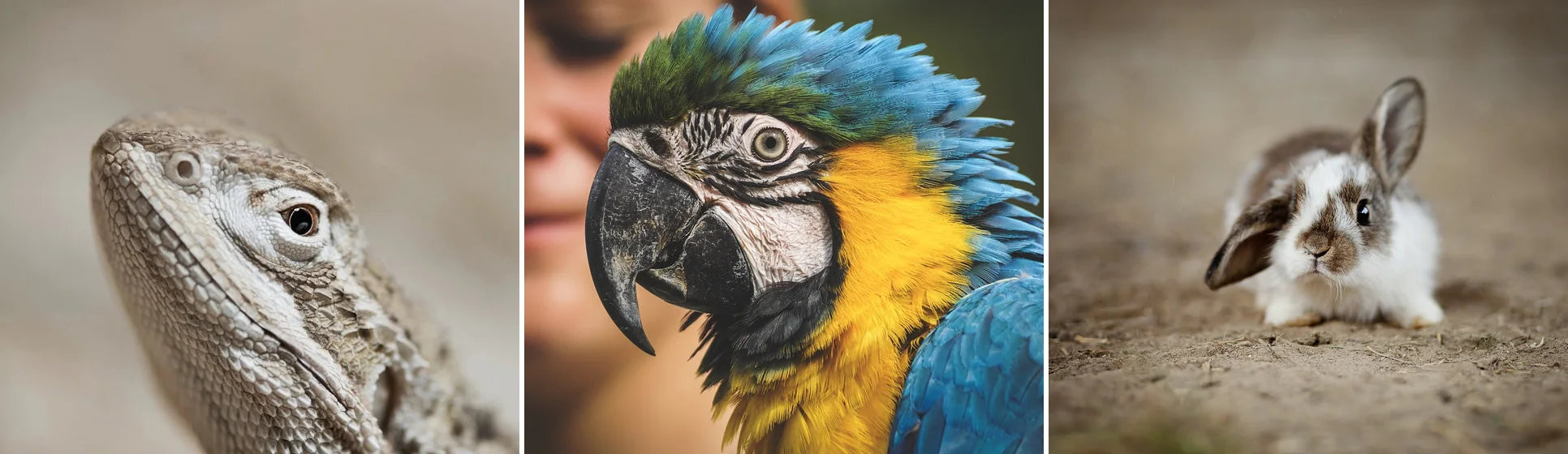
Reptiles, birds, rabbits, guinea pigs, chinchillas, hamsters — we see them all, and we see them regularly. Finding a vet who actually knows your species, not one who "can try," is harder than it should be in the SGV. South Pasadena Animal Hospital — your exotic animal clinic at 3116 W Main St in Alhambra — is now welcoming new exotic patients. Book a wellness exam and start with a proper baseline.
Here's the core problem with exotic animals: they don't act sick until they really are. Rabbits, birds, guinea pigs, reptiles — all prey animals, all hard-wired to suppress visible signs of weakness. A rabbit with dental disease keeps eating until it can't. A bird with a respiratory infection stays perched and grooming until it doesn't. By the time the behavior change is obvious to you, whatever's going on has usually been building for weeks.
This is exactly why wellness exams matter for exotic pets — arguably more than for dogs and cats. In a physical exam, we're checking weight (even a few grams off matters in a small animal), body condition, dental alignment, organ palpation, coat or scale quality, eyes, and more. A lot of what we catch in these visits is stuff the owner had no idea was happening. And small problems found early are manageable. The same problems found at crisis stage are not.
We also use the visit to talk through husbandry. Temperature gradients, lighting, diet, enrichment — these aren't secondary concerns for exotic animals. They're the primary ones. The most common reason exotic pets get sick isn't bad luck; it's a husbandry gap that's been in place for months or years. Adjusting something at home often makes more difference than any medication we could prescribe.
We see a lot of exotic patients at SPAH, and we take the time to actually go through these things with you. If you have questions before booking, just call.
This isn't about being picky. Exotic animals are genuinely different from dogs and cats in ways that change how they're diagnosed and treated. A rabbit's digestive system has nothing in common with a dog's. Some antibiotics that are perfectly safe for a cat will kill a guinea pig — we're not exaggerating. Reptile bloodwork doesn't look anything like mammal bloodwork.
A vet who mostly sees dogs and cats and takes on the occasional bearded dragon won't catch what a vet who sees them every week will. Dr. Gina Navia built her focus around exotic and small-mammal medicine, and it shows in how we work up these patients. That's the difference between “we'll try” and “we see this all the time.”
It's also why owners so often reach us after being turned away somewhere else. If you've been told “we don't see those,” call us at (626) 441-1314 — and if we're genuinely not the right fit for your species, we'll tell you that honestly over the phone rather than have you make the drive.
We care for a wide variety of exotic and small animal patients at our Alhambra clinic. If you do not see your pet listed, give us a call -- we are happy to discuss whether we can help.
Holland Lops, Lionheads, Mini Rex, and more
Dental checks, vitamin C status, skin health
Dental malocclusion, fur slip, GI health
Syrian, dwarf, and Roborovski breeds
Cockatiels, parakeets, conures, lovebirds
UVB needs, metabolic bone disease, parasites
Shell health, hibernation prep, husbandry
Ball pythons, leopard geckos, corn snakes
Also ferrets, sugar gliders, hedgehogs, rats, mice, and other small mammals. Learn more on our exotic vet page.
A nose-to-tail assessment of your pet's overall condition -- weight and body condition score, eyes, ears, nasal passages, mouth and teeth, skin or scales or feathers, musculoskeletal structure, and organ palpation. Any abnormality is discussed in detail so you know exactly what was found and what it may mean.
Many exotic health problems stem from husbandry issues rather than infection or disease. We review your pet's diet, feeding schedule, enclosure setup, temperature and humidity levels, lighting type and duration, and enrichment. Small adjustments can prevent major health problems down the road.
Based on your pet's species, age, and physical exam findings, we may recommend a fecal parasite test, bloodwork panel, or radiographs (X-rays). These diagnostics help us establish baseline values for your pet and detect internal problems that are not visible externally.
We will work with you to build a preventive care schedule appropriate for your pet's species and life stage. This may include parasite prevention, dental care for rabbits and guinea pigs, nail or beak trims, and vaccination planning for ferrets. Every recommendation is explained clearly before anything is done.
First-time exotic visits can feel stressful for owners — "I don't know how they'll handle the car, I don't know if the vet will know my species." We hear this regularly. Tell the front desk what you're bringing in when you book, and we can flag any specific needs ahead of time. For prey animals like rabbits and guinea pigs, we prefer to keep them separated from dogs and cats in the waiting area.
Before we start the physical exam, we'll go through a full history: how old is the animal, where did you get them, what do they eat, what does the enclosure look like, and what specifically prompted this visit. Bring any records from a previous vet if you have them. A stool sample is useful if your pet had a bowel movement recently — we can run a fecal parasite check on the spot.
After the exam, we walk you through everything we found. If something's off, we explain what it is and what the options are before recommending anything. If diagnostics are warranted, we tell you exactly what they'll tell us before scheduling. Nothing gets added to the bill without that conversation first.
Ready to get started? You can book your exotic pet's appointment online or call us at (626) 441-1314. Our clinic is at 3116 W Main St in Alhambra, open Monday through Friday, 8 AM to 6 PM.
We're at 3116 West Main Street in Alhambra — easy off the 10 or 710, with free parking out front. We see exotic pets from across the SGV: Alhambra, South Pasadena, Pasadena, San Gabriel, San Marino, Monterey Park, and surrounding communities. Pasadena pet owners especially find us convenient — less than 10 minutes via the 110. If you've been hunting for an exotic vet who actually knows your species, this is the page you were looking for.
Most general-practice clinics see primarily dogs and cats. That's not a criticism — it's just a reality that matters when your bearded dragon is sick. Exotic animal medicine involves different drug dosing, different reference ranges for bloodwork, different anesthesia protocols, different disease presentations. The gap between a vet who sees an occasional rabbit and one who sees them consistently is bigger than it might seem.
For rabbit owners specifically: dental disease is the thing we find most often that owners didn't know was there. Rabbit molars grow continuously and can develop painful spurs without showing obvious signs until the rabbit starts eating less. You can't see the back teeth at home. An annual exam gives us the chance to catch that early, before it becomes an emergency dental procedure under anesthesia.
For reptile owners: we get a lot of questions about lighting and supplementation at exams. Bearded dragons and tortoises need real UVB — not just warmth. Metabolic bone disease from inadequate calcium metabolism develops slowly and causes irreversible skeletal damage. The exam is a good time to walk through your current setup and make sure it's actually doing what you think it is.
Bird owners: weigh your bird weekly on a gram scale at home. Weight loss is almost always the first sign that something's wrong, and by the time a bird is visibly ill, it's usually been compensating for a while. Any unexplained drop of more than a few grams warrants a call. More on our exotic vet services here, or contact us directly.
Often, yes — that's how a lot of our clients find us. Being told "we don't see rabbits" or "we don't do reptiles" is the single most common thing exotic owners tell us on the phone. Reptiles, birds, rabbits, guinea pigs, chinchillas, hamsters, rats and backyard poultry are all part of our regular caseload rather than an exception we make. If your animal isn't on that list, call (626) 441-1314 and ask — we'd rather tell you honestly over the phone than have you drive out for nothing.
Our exam fees are published on the pricing page rather than quoted only over the phone, which is unusual in this area and deliberate on our part. What a visit costs beyond the exam depends entirely on the animal and the problem — a husbandry review is a different number from bloodwork or radiographs. We'll always talk through cost with you before we proceed. Planning ahead? See our honest breakdown of the first-year cost of owning an exotic pet.
We're at 3116 W Main St in Alhambra, centrally located in the SGV — about 10 minutes from Pasadena, 5 from San Gabriel and Monterey Park, and a short drive from San Marino, Rosemead, Temple City, Arcadia and Highland Park. Exotic animal care is a core part of our practice, not a sideline.
Reptiles (bearded dragons, leopard geckos, ball pythons, corn snakes, tortoises, turtles, blue-tongue skinks), birds (parrots, cockatiels, budgies, conures, lovebirds, finches, doves), rabbits, guinea pigs, chinchillas, ferrets, hedgehogs, rats, mice and other small mammals. If your pet isn't a dog or cat, call (626) 441-1314 and we'll tell you whether we're the right fit.
Yes — parrots, cockatiels, conures, budgies, lovebirds, finches and doves. Birds conceal illness better than almost anything we treat, so a bird that looks “a little quiet” has often been unwell for a while. We weigh every bird in grams at every visit, because feathers hide a startling amount of weight loss.
Once a year for most exotic pets in good health. The reason we push hard on annual exams specifically for exotic animals — not just dogs and cats — is that by the time you notice something's wrong, it's often been wrong for a while. A yearly check-in gives us a baseline and a fighting chance to catch things early. Older animals, or those with known conditions, may need twice a year. We'll discuss what makes sense for your specific pet.
Full physical exam — body weight and condition score, eyes, ears, skin or scales or feathers, beak or teeth, muscle tone, organ palpation. Then we go through husbandry: diet, housing, lighting, temperature. Diagnostic tests (fecal analysis, bloodwork, radiographs) are recommended based on what we find during the exam. Nothing is added without explaining why first.
Yes. We see a wide range of reptiles including bearded dragons, ball pythons, leopard geckos, blue-tongued skinks, tortoises, turtles, and more. Reptile care requires an understanding of species-specific husbandry, and our team is comfortable addressing the unique needs of these animals. See our reptile vet page for more information.
Yes. Especially yes for rabbits. They are prey animals that actively suppress visible signs of illness — by the time a rabbit is obviously sick, it's usually been sick for a while. Annual exams let us check dental health (rabbit teeth grow continuously and misalign without obvious symptoms), GI motility, weight trend, and body condition. Catching a dental problem at a routine visit is a very different situation than treating it at crisis stage.
Yes. South Pasadena Animal Hospital is currently accepting new exotic pet appointments. You can book online at our patient portal or call us at (626) 441-1314. We look forward to meeting your exotic pet.
Safe, precise beak trimming for parrots, cockatiels, and other bird species.
Learn more →Ferret and select avian vaccines available — ask us what's right for your species.
Learn more →We see dogs and cats too — one practice for all your household pets.
Learn more →We are now welcoming new exotic patients at our Alhambra clinic. Schedule your pet's wellness exam online in minutes, or give us a call and our team will find a time that works for you.