May 5, 2026 · 8 min read
Leopard Gecko Care: Tank Setup, Diet, Temperature & Vet Needs
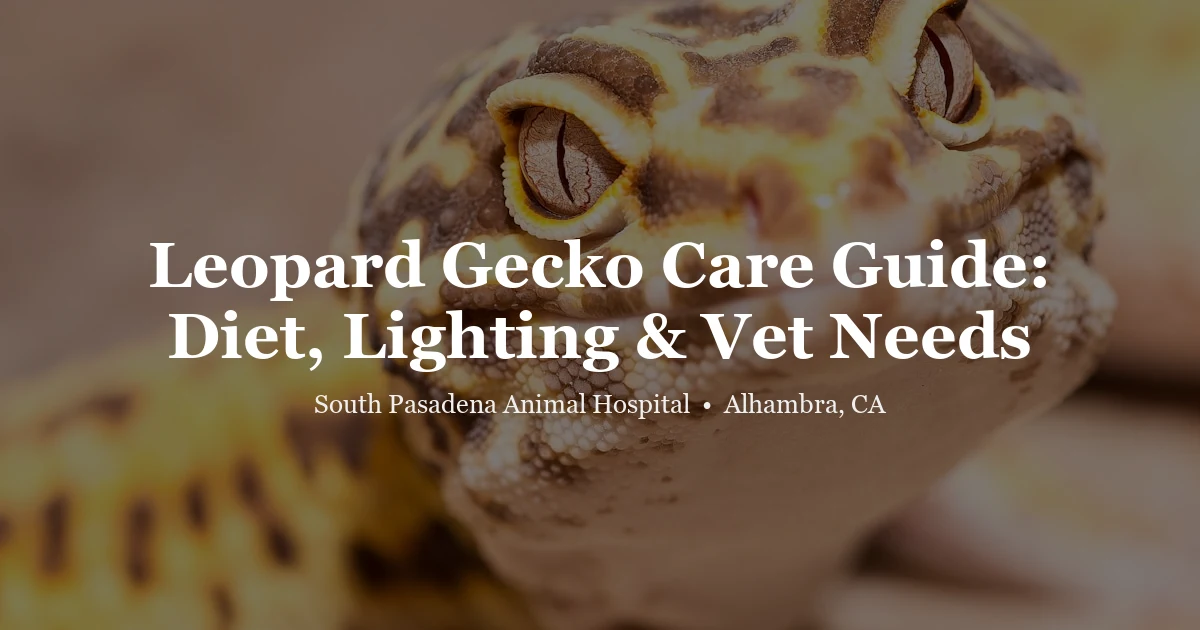
Leopard geckos are one of the most popular reptile pets in the US — and for good reason. They're small, manageable, relatively calm with regular handling, and have a lifespan that makes them a genuine long-term companion (10 to 20 years with good care). They're also one of the most commonly kept exotic pets we see at our Alhambra clinic.
That said, "low-maintenance reptile" is relative. Leopard geckos have specific husbandry needs that, when not met, lead to real health problems. This guide covers what you actually need to set up and maintain correctly.
Enclosure Setup
Tank Size
A single adult leopard gecko needs a minimum of a 20-gallon long enclosure (30" x 12" footprint). Bigger is better — 40-gallon tanks give adult geckos more room to thermoregulate and explore. Do not use tall tanks (designed for tree-dwelling species) — leopard geckos are ground-dwellers that need horizontal space, not vertical height.
Substrate
Substrate choice significantly affects health. Safe options:
- Tile (ceramic or slate): Easy to clean, naturally smooth, good for wearing down nails. The safest option overall.
- Reptile carpet: Acceptable; wash regularly to prevent bacterial growth.
- Paper towels: Best for hatchlings and sick or quarantine animals.
- Bioactive setups with organic topsoil mixed with play sand: Advanced option; can be excellent if maintained properly.
Avoid: calcium sand, fine play sand, gravel, or any loose particulate substrate for juveniles. Leopard geckos ingest substrate while hunting and can develop life-threatening impactions, particularly when young or when calcium-deficient (they may eat substrate trying to supplement).
Hides
Leopard geckos are crepuscular (most active at dawn and dusk) and require hides to feel secure. Every enclosure needs:
- A warm hide on the heated side (temperatures inside 88–92°F) — this is where they digest and thermoregulate
- A cool hide on the unheated side for rest
- A humid hide lined with damp sphagnum moss — essential for proper shedding. Without it, retained shed on toes and tail can constrict blood flow and cause digit loss.
Temperature
Leopard geckos thermoregulate primarily through ground contact (unlike basking lizards that use overhead heat). The correct way to heat a leopard gecko enclosure is with an under-tank heater (UTH) or heat mat connected to a thermostat. Without a thermostat, heat mats can reach dangerous temperatures.
- Warm side floor surface temperature: 88–92°F (measured with a probe or infrared thermometer on the substrate surface, not the air)
- Cool side floor: 75–80°F
- Ambient air temperature: 70–80°F
- Nighttime: Can drop to 65°F; below 60°F risks immune suppression
Do not use hot rocks — they heat unevenly and cause thermal burns. Do not rely on heat lamps alone without a UTH; leopard geckos need belly heat for digestion.
Lighting
Leopard geckos are crepuscular/nocturnal and do not bask under hot basking lights. For years, they were kept successfully without UVB. However, current research and veterinary recommendations increasingly support providing low-level UVB (2.0 or 5.0 UVB bulb, offered as an indirect ambient light source for 10–12 hours daily). UVB exposure supports vitamin D3 synthesis, better immune function, and improved long-term health outcomes.
At minimum, a regular daylight-spectrum LED or fluorescent light provides a natural day/night photoperiod that regulates their behavior. A regular lamp on a timer (10–12 hours on, 12–14 hours off) is acceptable if no UVB is used.
Diet
Leopard geckos are insectivores and eat live insects only. They will not accept dead, frozen/thawed, or freeze-dried insects in most cases. All insects must be gut-loaded and dusted with supplements before feeding.
Best Feeder Insects
- Dubia roaches: Excellent nutrition; legal in California; don't jump or escape easily
- Crickets: Widely available; must be gut-loaded; never leave loose ones in enclosure overnight
- Black soldier fly larvae (Calci-worms): High in calcium; good for supplementing or as a treat
- Mealworms: High in fat; fine as an occasional treat but not a staple (too fatty for regular feeding)
- Waxworms: Very high fat; only as a treat or to stimulate appetite in a sick gecko. Geckos can become "addicted" to waxworms and refuse other food
Feeding Schedule
- Juveniles (under 1 year): Feed daily; offer insects in appropriate size (no larger than the space between the gecko's eyes)
- Adults: Feed every other day; 6–10 appropriately sized insects per feeding
Supplementation
Calcium supplementation is essential. Use:
- Calcium powder (without D3): dust insects every feeding
- Calcium with D3 or multivitamin: every 2–3 feedings
- A calcium dish in the enclosure: leave a small dish of pure calcium carbonate powder inside; geckos will lick it when they need it
Common Health Problems
Metabolic Bone Disease (MBD)
The most common preventable condition. Caused by calcium/vitamin D3 deficiency. Signs: soft or rubbery jaw and limbs, difficulty walking, muscle tremors, lethargy. Prevention: proper supplementation and adequate UVB exposure. Treatment requires veterinary care.
Retained Shed (Dysecdysis)
Incomplete shedding can leave dry skin constricting toes, the tail tip, and eyelids. This restricts blood flow and can cause digit and tail loss if not addressed. Signs: ring of dry skin around toes, cloudy patches of stuck shed. A warm soak can help loosen mild retained shed, and a humid hide should always be available to prevent it. For shed stuck around the eyes or toes, have your vet remove it safely — this is delicate tissue and improper removal at home can cause injury.
Cryptosporidiosis
A parasitic infection caused by Cryptosporidium varanii (formerly C. saurophilum). This is unfortunately common in leopard geckos, particularly those from high-volume breeding operations. Signs: chronic weight loss despite normal or increased appetite, "stick tail" appearance (severely thin tail), regurgitation. No reliable cure exists, but supportive care can extend and improve quality of life. Diagnosis requires fecal PCR testing at the vet.
Parasites
Internal parasites including pinworms and coccidia are common. A fecal exam at our clinic can detect these and guide treatment.
Mouth Rot (Infectious Stomatitis)
Signs include swelling around the mouth, yellow or cheesy discharge, and difficulty eating. Usually bacterial in origin and requires veterinary antibiotic treatment.
Egg-Binding in Females
Female leopard geckos can produce infertile eggs without a male present. If they cannot lay eggs due to lack of appropriate laying substrate, they become egg-bound. This is a medical emergency. Provide a container of moist sand or topsoil for laying. Signs of egg-binding: swollen abdomen, inability to lay, lethargy, loss of appetite.
When to See a Vet
We recommend a wellness exam within the first month of ownership for any new leopard gecko — to establish baseline health, check for parasites, and review husbandry. After that, annual exams are appropriate for healthy adults. See a vet sooner if you notice:
- Significant weight loss or "stick tail"
- Any retained shed around toes or eyes
- Difficulty walking or tremors
- Swelling around the jaw or abdomen
- Complete refusal to eat for more than 2–3 weeks (outside of normal brumation periods)
We see leopard geckos at South Pasadena Animal Hospital in Alhambra. Learn about our exotic animal veterinary care, call (626) 441-1314, or book online. Check our pricing page for visit information.
Frequently Asked Questions
Are leopard geckos good pets for beginners?
They're among the more manageable reptile pets — small, calm, and not requiring the intense heat/UVB setup of larger lizards. That said, they still need proper temperatures, live insect feeding, and veterinary access. "Easy" is relative in reptile keeping.
What do leopard geckos eat?
Live insects only: dubia roaches, crickets, black soldier fly larvae, and occasionally mealworms or waxworms as treats. All insects must be gut-loaded and dusted with calcium before feeding.
What temperature does a leopard gecko tank need?
Warm side floor: 88–92°F. Cool side: 75–80°F. Achieved with an under-tank heater connected to a thermostat. Air temperature matters less than ground surface temperature.
Do leopard geckos need UVB lighting?
They can survive without it, but low-level UVB (2.0 or 5.0) is now recommended for improved long-term health. At minimum, provide a natural day/night light cycle with a regular lamp on a timer.
How long do leopard geckos live?
10–20 years with proper care. Males tend to live longer than females. This is a long-term commitment that many owners underestimate when they first get a gecko.