March 31, 2026 · 8 min read
Signs Your Bearded Dragon Needs to See a Vet
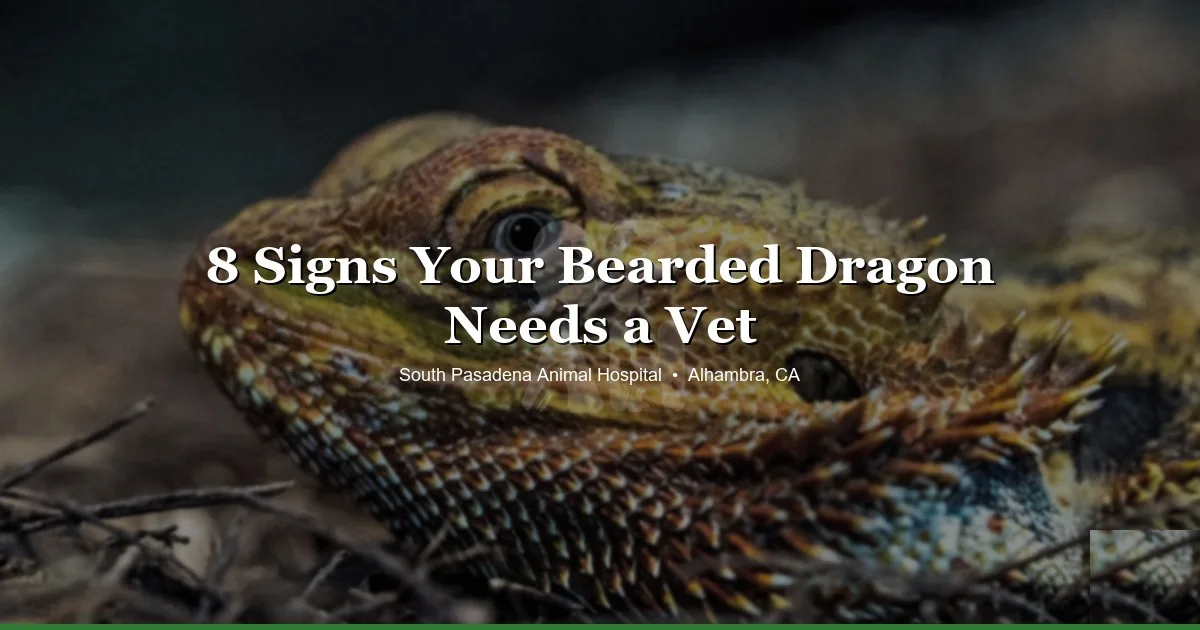
Bearded dragons are really good at acting fine when they're not. It's a survival thing — in the wild, looking sick gets you eaten. That instinct carries over into captivity, which means by the time you actually notice something off, your beardie has probably been dealing with it for a while already.
We see this a lot at South Pasadena Animal Hospital. An owner brings in their dragon thinking it just started acting weird yesterday, and it turns out the problem's been building for weeks. So here are the signs we tell people to watch for — the ones that actually matter.
The appetite question we field constantly
This is probably the most common call we get about bearded dragons. "My beardie stopped eating — should I be worried?"
Honestly, sometimes no. Brumation, shedding, a new enclosure — these can all cause a temporary dip in appetite that resolves on its own. We usually tell people to give it a few days to a week before panicking.
But here's when it becomes a real concern:
When the appetite loss is worth a call: two or more weeks without eating when it's not brumation season; visible hip bones or a thinning tail base; appetite loss coming alongside any other sign on this list.
A lot of owners try switching up the food first — different bugs, different greens. That's not a bad instinct, but if it's parasites, mouth rot, impaction, or early metabolic bone disease, a diet change isn't going to fix it. Better to come in and rule out the serious stuff.
Lethargy is usually the setup talking, not the dragon
A healthy beardie should be up and doing things during the day. Basking, watching you from across the room, maybe glass surfing if they're feeling restless. If yours is just lying flat, not interested in basking, not reacting when you open the enclosure — that's not normal.
Now, before you rush in: check your setup first. We can't tell you how many times the issue turns out to be a burned-out UVB bulb or basking temps that drifted too low. Those bulbs lose output way before they actually stop working — if yours is older than 6 months, replace it. Basking spot should be 100–110°F, cool side around 80–85°F.
If the husbandry checks out and they're still flat after a few days, that's when we want to see them. Could be infection, parasites, organ issues — things you can't fix by adjusting the tank.
When the black beard becomes the only color we see
Bearded dragons puff out a dark beard for all kinds of reasons — territorial display, stress, temperature regulation. Totally normal in short bursts.
What's not normal is when it stays dark. Like, persistently. Especially if they're also puffed up, not eating, or just seem off. In our experience, a beard that won't go back to normal can be a sign of pain. The dragon can't tell you something hurts, so this is kind of their version of that. We commonly see it alongside respiratory infections or GI problems — things that aren't visible from the outside.
Gaping off the basking light is the one that worries us
Quick distinction here: mouth gaping while sitting under the basking light is fine. That's how they cool off. But if your beardie is open-mouth breathing when they're not basking? That's a problem.
Watch for:
Respiratory signs: bubbles or mucus around the nose or mouth, clicking or wheezing sounds when breathing, stringy saliva or discharge, the whole body puffing up visibly with each breath like they’re working hard to get air in.
This is often a respiratory infection. And here's the thing with reptile respiratory infections — they escalate fast. We generally tell people not to wait this one out. Getting on prescription treatment early from a vet is a lot better than dealing with pneumonia later.
One eye versus two eyes tells us a lot
Eye problems in beardies can mean a few different things depending on whether it's one eye or both:
One eye puffy or shut could be an abscess, injury, or retained shed wrapped around the eye area. Both eyes affected is more likely systemic — vitamin A deficiency or a lighting issue.
Speaking of lighting — if you're still using a coil-style UVB bulb, that might actually be the cause. Those compact coils can irritate their eyes. We always recommend switching to a linear tube UVB (like ReptiSun 10.0 or Arcadia). It's better coverage anyway.
Either way, don't try to treat eye issues at home with random drops. What works depends entirely on what's causing it, and getting that wrong can make things worse.
The unglamorous topic that tells us the most
Not the most glamorous topic, but honestly one of the most useful things to pay attention to. Normal bearded dragon poop has two parts: a brown solid and a white urate (that's basically their version of urine). Once you know what normal looks like, abnormal is pretty obvious.
Bring them in if you see:
Red or black in the stool could mean internal bleeding. Very runny or unusually smelly stool points toward parasites. No stool for a week or two despite eating suggests possible impaction.
Impaction is something we see a lot, especially with dragons kept on loose substrate like sand or crushed walnut. Food that's too large can cause it too. A warm bath can sometimes help things along, but if it's been more than a few days with no results, don't keep waiting it out at home. Impaction can get serious, and it's worth having us take a look.
Soft, bendy limbs are the sign we never want to see
This one's hard to watch. If your beardie is shaking, can't seem to lift their body properly, or their limbs feel soft and bendy — that's almost certainly metabolic bone disease (MBD). It's one of the most common things we treat in bearded dragons.
MBD happens when they're not getting enough calcium, vitamin D3, or UVB light. The body starts pulling calcium out of the bones to keep things functioning, and over time the bones get soft and deformed. Sometimes the jaw feels spongy. The legs can start to bow.
The good news is that if you catch it early, it's very treatable. The bad news is that once the bones are deformed, that damage is permanent. So this is one where we'd rather see your dragon too early than too late. Prevention-wise: proper UVB tube bulb (replaced every 6 months, seriously), and calcium with D3 dusted on food regularly.
Stuck shed has cost dragons their toes
Shedding is normal. Beardies do it their whole lives, more often when they're young. Usually the old skin comes off in patches and that's that. But sometimes shed gets stuck — and when it wraps tight around toes, tail tips, or the area around the eyes, it can actually cut off circulation. We've seen dragons lose toes to retained shed that went unaddressed.
Other skin things to watch for:
Dark patches on the belly are usually thermal burns — this is why we say no heat rocks, ever; use overhead heat only. Yellow or orange discoloration could be yellow fungus disease, a serious fungal infection requiring prompt treatment. Lumps, bumps, or raised areas could be abscesses, parasites, or growths.
When It Can't Wait
Most of the signs above warrant a vet visit within a few days. But some things are genuine emergencies:
Prolapse (tissue coming out of the vent): keep it moist with a damp cloth and get to a vet today, not tomorrow. Egg binding in females — straining, swollen belly, lethargy — can be fatal without help. Trauma (dropped, stepped on, grabbed by another animal): even if they look okay, internal injuries happen. Seizures or paralysis: severe MBD, toxin exposure, or neurological problems.
What Actually Happens at a Reptile Vet Visit
A lot of bearded dragon owners have never taken a reptile to the vet before, so here's what the visit usually looks like with us:
At the visit: a full physical exam including weight, body condition, mouth, belly palpation, skin and eyes. A fecal test — we run this on almost every beardie we see because parasites are incredibly common, especially in pet-store animals. Bloodwork when we’re concerned about organ function or calcium levels. And a husbandry review where we ask about temps, UVB type, diet, and supplements — a lot of bearded dragon problems trace back to the setup.
We try to keep things straightforward. You can check our pricing page to see what exams cost before you come in.
Keeping them healthy long-term
Annual checkups, twice yearly for older dragons — catches problems before they get expensive. Good UVB lighting is probably the single most important thing in the enclosure: a linear tube bulb (Arcadia or ReptiSun 10.0), replaced every six months even when it still turns on. Age-appropriate diet: juveniles need more insects, adults need more greens; a lot of owners keep feeding mostly bugs into adulthood and wonder why their dragon is overweight. Calcium with D3 dusted on food every other feeding. And in Southern California, take advantage of the sun — supervised outdoor time on warm days (above 75°F) does things for beardies that even the best UVB bulb can’t fully replicate.
Bottom line — if something seems off with your bearded dragon, don't sit on it. Reptiles are tough, but by the time they look sick, they've usually been sick for a while. Earlier is always better. We see bearded dragons and other reptiles at our Alhambra clinic and we're happy to take a look. If you also keep turtles or tortoises, our guide to common turtle and tortoise health problems covers the signs most owners miss.
Frequently Asked Questions
How long can a bearded dragon go without eating before I should call a vet?
It depends on context. During brumation or a shed cycle, a week or two of reduced appetite is fairly normal. But if it's not brumation season and your dragon hasn't eaten in two or more weeks, especially if they're also lethargic or losing visible weight, that's when we want to hear from you. Don't wait it out hoping things turn around on their own — by that point, something correctable can become something serious.
My bearded dragon's beard is dark all the time. Is that pain?
It can be. A beardie who flares their beard briefly for display or thermoregulation is doing something completely normal. But a beard that stays persistently dark — especially paired with loss of appetite, puffiness, or just an "off" overall vibe — is worth taking seriously. We see this a lot alongside respiratory infections and GI issues. The dragon can't tell you something hurts, so this is one of their ways of signaling it.
What is metabolic bone disease and how do I know if my dragon has it?
Metabolic bone disease (MBD) happens when a bearded dragon doesn't get enough calcium, vitamin D3, or quality UVB light. The body pulls calcium from the bones to keep essential functions running, and over time bones soften and deform. Signs include trembling or shaking limbs, difficulty lifting the body off the ground, a rubbery jaw, or legs that seem to bow outward. If you notice any of these, call us — early cases respond well to treatment, but bone deformities that develop are permanent.
Can I treat a bearded dragon's stuck shed at home?
You can help in mild cases by soaking your dragon in lukewarm water for 15–20 minutes and gently patting the affected area with a damp cloth. Never pull or force stuck shed off — that can tear the skin underneath and cause serious injury. If shed is wrapped tightly around toes, tail tips, or the eye area and won't release within a day or two with soaking, that's a vet visit. Constricted shed can cut off circulation and we've seen toes lost to retained shed that wasn't addressed promptly.
How often should a healthy bearded dragon see a vet?
We recommend once a year for healthy adult dragons, and twice a year as they get older. Annual visits should include a physical exam, a fecal parasite check (beardies — especially those who came from pet stores — commonly carry parasites), and a husbandry review. A lot of the health problems we treat could have been caught earlier or prevented entirely. We'd rather see your dragon when they're healthy than only when something's wrong.