June 11, 2026 · 7 min read
Gerbil Care 101: Housing, Diet, and Health Problems to Watch For in Alhambra
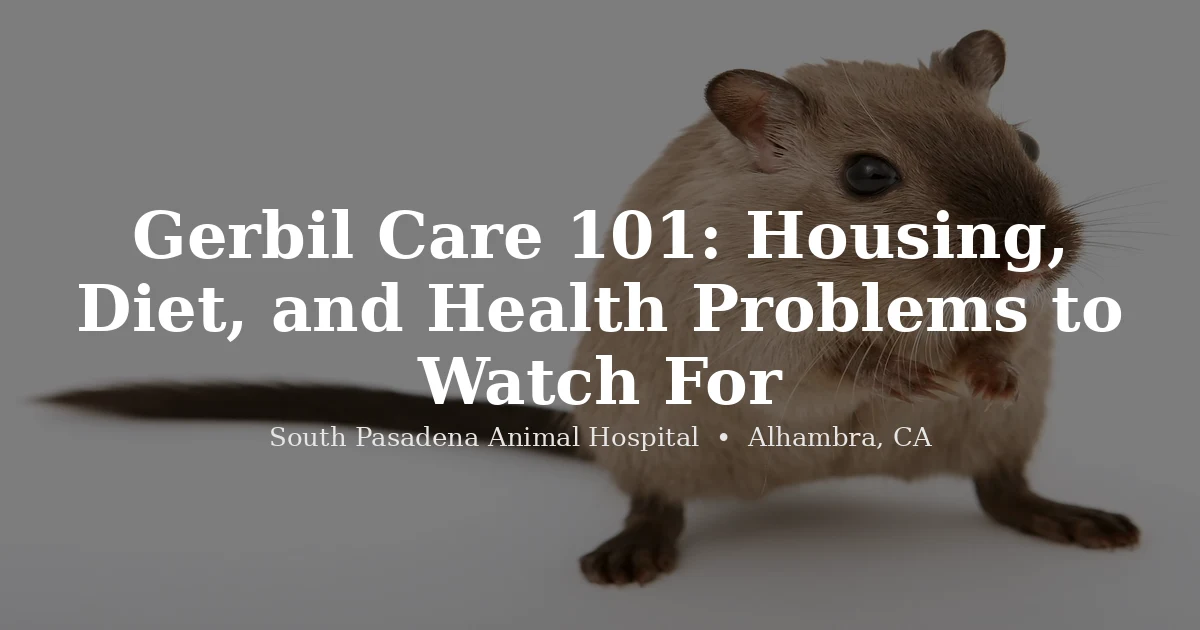
Gerbils are marketed as beginner pets, and in some ways that's fair — they're clean, low-odor, and fascinating to watch. But they have a few quirks that catch new owners off guard: they require a companion, they can have epileptic seizures, their tails are fragile, and they develop serious health problems in middle age that owners often chalk up to "old age" instead of addressing. This guide covers what we've found most useful to know before problems arise.
Are Gerbils Good Pets?
For the right household, yes. Gerbils are active during the day more than many small rodents, they're naturally curious, and they don't have the strong odor that can come with some other small mammals if their cage is kept clean. They're also relatively inexpensive to feed and house compared to larger pets.
That said, a gerbil pet isn't a low-maintenance "set it and forget it" animal. They're social and should be kept in same-sex pairs or small groups — a lone gerbil is a stressed gerbil. They're quick, can squeeze through surprisingly small gaps, and their tails can suffer a degloving injury if grabbed, which makes them better suited to older children or adults who can handle them gently. With a properly set-up enclosure and a companion, gerbils can be a rewarding, easy-to-watch pet — just go in knowing what they need.
Housing: Deep Bedding Is Not Optional
Gerbils are desert burrowers. In the wild, Mongolian gerbils construct tunnel systems several feet deep. The cage setup that serves them best replicates this: a deep layer of substrate — at least 6 to 8 inches, ideally more — that allows genuine digging and tunneling behavior. Paper-based bedding like Carefresh or Kaytee Clean & Cozy works well. Cedar and pine shavings should be avoided, as the aromatic compounds are irritating to the respiratory tract.
Tank-style enclosures (a 20-gallon glass tank with a secure mesh lid, or a purpose-built gerbilarium) work better than wire cages for gerbils because they contain the bedding and allow deeper substrate. Wire cage floors can also injure feet and the tail.
The social requirement
Gerbils are obligately social. A lone gerbil is a chronically stressed gerbil. Same-sex pairs established from a young age work best. Introducing adult strangers is possible but requires a careful split-cage introduction over 1–2 weeks, as adult gerbils can fight seriously — drawing blood is not uncommon in poorly managed introductions.
Declanning warning: Sometimes bonded gerbils — even pairs that have lived together for months — will suddenly turn on each other. This is called declanning and typically occurs in gerbils over 6 months old after a disruption to the group dynamic. Once true declanning starts, the pair usually cannot be safely reunited. Separate immediately if you see escalating chasing, biting, or weight loss in one animal.
Diet: Seed Mixes vs. Pellets
Commercial seed mixes are widely available and heavily marketed, but they create a problem: gerbils selectively eat the high-fat seeds (sunflower seeds, pumpkin seeds) and leave the rest. The result is a nutritionally imbalanced diet and, over time, obesity. A high-quality pellet — Oxbow Essentials Hamster & Gerbil or a similar fortified pellet — fed as the staple eliminates selective feeding and ensures consistent nutrition.
Fresh vegetables can be offered in small amounts several times a week. Leafy greens, broccoli florets, cucumber, and carrot are well tolerated. Avoid citrus, onion, garlic, and anything high in sugar. A small amount of high-quality seed mix or occasional mealworms makes good enrichment, offered as a supplement rather than a staple.
Fresh water should always be available. A water bottle with a ball-tip sipper tube is preferable to an open bowl, which gerbils will fill with bedding almost immediately.
Common Health Problems
Tyzzer's Disease
Tyzzer's disease — caused by the bacterium Clostridium piliforme — is the gerbil equivalent of wet tail in hamsters. It presents as sudden, severe watery diarrhea, lethargy, a hunched posture, and rapid decline. Young gerbils are most vulnerable, and the condition is often triggered by stress: a new environment, transport, overcrowding, or a sudden diet change. This disease moves fast. A gerbil showing these signs needs veterinary attention within 24 hours. Early antibiotic treatment significantly improves the outcome.
Seek veterinary care immediately for any gerbil with watery diarrhea, sudden collapse, labored breathing, a wound from fighting, or a degloved tail. These are not situations where waiting a day or two is safe.
Epilepsy and Seizures
Epileptic-like seizures are remarkably common in Mongolian gerbils — estimates range from 20 to 40% of the captive population. Episodes are typically triggered by stress or sudden changes in the environment: a new person, a loud noise, being transported. Most seizures last under a minute and the gerbil recovers on its own, sometimes appearing dazed for a few minutes afterward.
A gerbil that seizes occasionally and recovers fully within 1–2 minutes generally doesn't require medication. Frequent seizures, prolonged episodes (more than 2–3 minutes), or episodes that increase in severity over time warrant a veterinary evaluation. Minimizing sudden environmental changes helps reduce frequency in seizure-prone individuals.
Tail Degloving
The tail of a gerbil is covered by relatively fragile skin that can slip off if the tail is grabbed, caught in something, or constricted. Once the skin has been lost, the exposed section of tail needs to be amputated to prevent infection — the exposed bone will not reheal on its own. This is a straightforward surgical procedure and gerbils recover well, but it does require veterinary attention promptly after the injury.
Never pick up a gerbil by the tail. Handle them by cupping from below or letting them walk into your hand.
Dental Malocclusion
Gerbil incisors grow continuously. If the upper and lower teeth don't meet correctly, they overgrow rather than wearing down against each other. Signs of dental problems include difficulty eating, dropping food, weight loss, and drooling. Malocclusion can be hereditary or result from an injury. Treatment involves regular incisor trimming under sedation; in some cases extraction is the most humane long-term option. Providing wooden chew toys helps maintain normal wear.
Scent Gland Tumors
Gerbils have a prominent ventral scent gland on the belly — a flat, slightly hairless oval patch in the midline. This gland is prone to developing tumors, particularly in older gerbils (18 months and beyond). Early signs include the gland looking crusty, ulcerated, or growing in size. Small, early-stage tumors can often be removed successfully. Left untreated, they can become large, infected, and ulcerated wounds. We check the scent gland at every wellness exam.
Respiratory Infections and Alopecia
Respiratory infections present as wheezing, labored breathing, nasal discharge, and decreased activity. They can be bacterial or viral and are most common in immunocompromised or stressed animals. Bacterial infections respond well to antibiotics when caught early.
Fur loss around the nose and eyes — a common finding in gerbils — is usually from chronic rubbing against cage bars or the habitat walls. It's not typically a primary disease, but it signals a husbandry issue: the gerbil is likely trying to escape, which suggests inadequate space or enrichment.
When to See a Vet
New gerbils should have a baseline wellness exam within a few weeks of coming home. After that, annual exams are valuable even when the gerbil appears healthy — many conditions like scent gland tumors and dental issues are easier to address at an early stage.
See a vet promptly for diarrhea, fighting wounds, degloved tail, significant weight loss, labored breathing, or any behavioral change that seems sudden. Our exotic animal care team in Alhambra sees gerbils and other small rodents — you can find more information at our services page. Owners near South Pasadena are just minutes away.
Frequently Asked Questions
Do gerbils need to be kept in pairs?
Yes. Mongolian gerbils are obligately social animals — keeping a gerbil alone causes chronic stress that shortens lifespan and increases disease risk. Gerbils should be kept in same-sex pairs or small groups established from a young age. Introducing adult gerbils who are strangers is possible but requires a careful, slow split-cage introduction, as established gerbils can fight seriously. Bonded gerbils rarely fight; unbonded ones can injure each other badly.
What is declanning in gerbils?
Declanning is the breakdown of the social bond between previously bonded gerbils. It typically occurs in gerbils over six months old and can be triggered by the death of a third group member, a disruption to the living environment, or simply changing social dynamics. Declanning looks like sudden, escalating aggression between gerbils who previously got along. Once true declanning starts, the gerbils usually cannot be safely reunited. Separating them permanently is often the only safe option.
What is Tyzzer's disease in gerbils?
Tyzzer's disease is a bacterial infection caused by Clostridium piliforme. It presents as sudden onset of lethargy, watery diarrhea, poor coat condition, and rapid deterioration — similar to wet tail in hamsters. It's often triggered by stress: overcrowding, unsanitary conditions, sudden diet changes, or the stress of transport. Young gerbils are most vulnerable. The disease progresses quickly, and any gerbil showing these signs needs veterinary attention within 24 hours. Antibiotic treatment can be effective if started early.
Why did my gerbil's tail lose its skin?
Tail degloving in gerbils happens when the tail is grabbed, caught, or constricted — the outer skin of the tail slides off, exposing the underlying tissue. This is why you should never pick up a gerbil by the tail. Once the skin has been lost, the exposed section of tail typically needs to be amputated by a veterinarian to prevent infection and further trauma. It's a fairly common injury in gerbils and one that heals well with proper veterinary care.
Do gerbils get seizures?
Yes. Epilepsy-like seizures are common in Mongolian gerbils — estimates suggest 20–40% of gerbils experience them at some point. Seizures are usually triggered by stress or sudden environmental changes: a new noise, an unfamiliar smell, being picked up suddenly. Most episodes last under a minute and the gerbil recovers on its own. Frequent, prolonged, or severe seizures warrant a vet visit. A gerbil that seizes occasionally and recovers quickly within 1–2 minutes generally doesn't require medication.
What health problems are common in older gerbils?
Gerbils over 18 months old are at increased risk for scent gland tumors (which appear as a crusty, ulcerated growth on the belly), dental malocclusion (misaligned incisors that grow too long), alopecia (fur loss around the nose and eyes from chronic rubbing), and respiratory infections. Kidney disease also becomes more common in older gerbils. Annual vet exams help catch these problems early, when treatment is more straightforward.
Does SPAH see gerbils in Alhambra?
Yes. South Pasadena Animal Hospital sees gerbils and other small exotic pets at our Alhambra location. Call (626) 441-1314 or book online to schedule an appointment. We're at 3116 W Main St, Alhambra, CA 91801.