June 16, 2026 · 9 min read
Leopard Gecko Health Problems: A Vet's Guide to What Goes Wrong
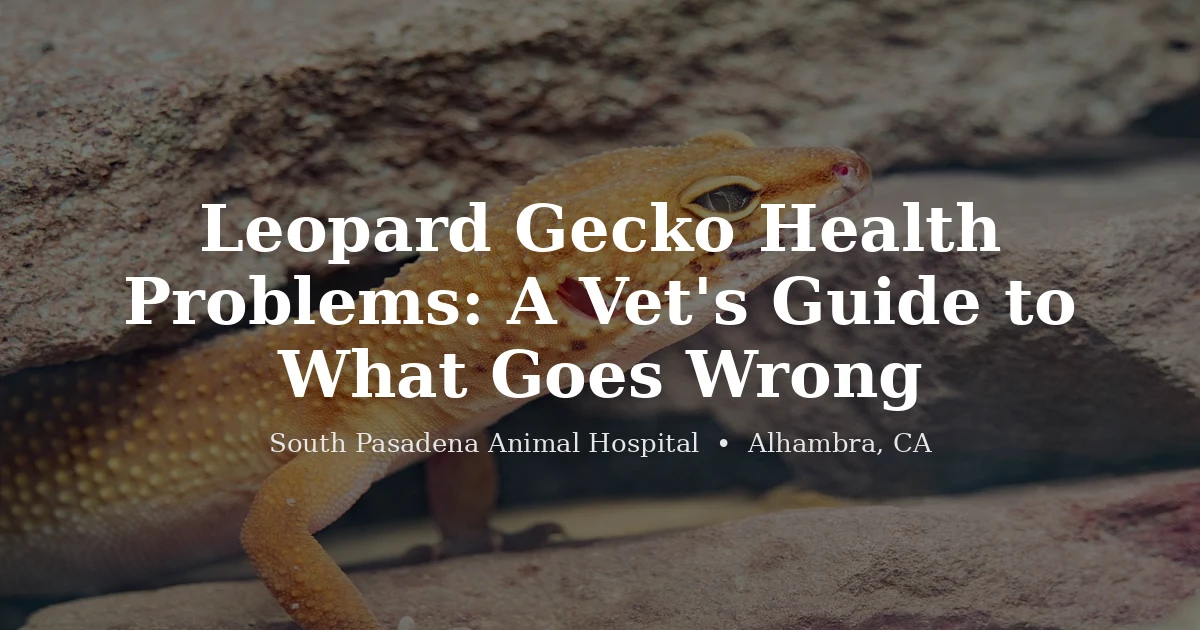
Leopard geckos have a reputation as one of the easier reptiles to keep, and there's some truth to that. They don't need UV-B lighting, they tolerate a range of conditions better than many species, and they tend to be calm and manageable. But "easier" is not the same as "problem-free." We see leopard geckos in our clinic with serious health issues — and the pattern is almost always the same: a small husbandry gap that nobody noticed until the gecko stopped eating, lost significant weight, or started showing signs that were impossible to ignore.
The tricky thing about leopard geckos is that they are good at masking illness. By the time you're seeing obvious external signs — tremors, swollen limbs, labored breathing, dramatic weight loss — the condition has often been progressing for weeks. Earlier is always better. A gecko that seems "off" but isn't yet clearly sick is still worth a phone call.
This guide covers the most common leopard gecko health problems we see, what causes them, how to recognize them early, and when to stop watching and call a vet.
The Most Common Leopard Gecko Health Problems
Metabolic Bone Disease (MBD)
Metabolic bone disease is one of the most common and most preventable conditions we see in leopard geckos. It develops when a gecko is chronically deficient in calcium, vitamin D3, or both. Without adequate calcium and the D3 needed to absorb it, the body starts pulling calcium from the bones to maintain basic physiological functions. The bones weaken. The muscles lose normal tone. Over time, the skeleton literally fails.
The signs are hard to miss once they're present. Rubbery or pliable limbs that bend abnormally when the gecko moves. Tremors or muscle twitching — sometimes visible in the legs or tail. Lower jaw deformity, where the jaw appears swollen, curved, or soft. Difficulty walking or an unusual, low-slung gait. In severe cases, pathological fractures can occur from normal activity.
The cause almost always traces back to supplementation. Leopard geckos do not require UV-B lighting — but without UV-B, they can't synthesize vitamin D3 through their skin the way sun-exposed reptiles do. That means every calcium supplement you dust their prey with must include D3. Using plain calcium without D3, or skipping supplementation altogether, is the most common setup error we see. Every feeding for juveniles, every other feeding for adults — that's the standard approach, though your vet can advise on the specifics for your gecko's age and condition.
MBD is treatable in early stages, but the bone changes that accumulate over time can be permanent. If you're seeing any of these signs, a vet visit and X-rays to assess bone density are the right next step.
Impaction
Impaction means a blockage in the digestive tract — and in leopard geckos, it's most often caused by ingesting loose substrate. Sand is the most common culprit, but calcium sand, fine gravel, and walnut shell are all equally problematic. Geckos ingest substrate accidentally during feeding (tongue contact with the ground) or, in some cases, deliberately if they are calcium-deficient and seeking the mineral.
Early signs can be easy to miss: decreased appetite, less activity than usual. As the blockage develops, you may notice abdominal bloating or distension, straining without producing stool, or a complete stop to defecation. In severe cases the gecko becomes lethargic and stops eating entirely.
Do not try to treat suspected impaction at home with oil, baths alone, or laxatives. These approaches may help in mild cases but can make a serious obstruction worse. If your gecko hasn't defecated in more than a week and is showing any other signs, call a vet. Imaging can confirm whether there is a true blockage and guide the right treatment.
The straightforward prevention: switch to a non-particulate substrate. Paper towels, ceramic tile, and reptile carpet carry essentially zero impaction risk. If you want a naturalistic setup, slate tile or a properly structured bioactive enclosure with a solid base layer is far safer than any loose particulate option.
Dysecdysis (Retained Shed)
Leopard geckos shed regularly — more often as juveniles, less so as adults — and a healthy shed should come off in large pieces within a day or two. When pieces remain stuck, especially on the toes and around the eyes, that's dysecdysis. The usual cause is insufficient humidity during the shed cycle, though stress, illness, and dehydration can also contribute.
Retained shed on the body is annoying and worth addressing, but retained shed on the toes is urgent. The constricting ring of old skin acts like a tourniquet. Within days, it can cut off circulation completely, leading to tissue death and toe loss. We see this regularly, and it is entirely preventable.
If your leopard gecko has retained shed on its toes, act the same day. A 10–15 minute warm, shallow soak followed by gentle loosening with a damp cotton swab may help if the shed is still soft. If it does not come off easily, do not force it — call us at (626) 441-1314. Pulling at dry, constricting shed without the right technique risks damaging the underlying tissue.
The best prevention is a proper moist hide: a small enclosed hide on the warm side of the enclosure with damp sphagnum moss or a damp paper towel inside. Your gecko will use it when shedding, and most retained shed problems simply disappear. If your gecko is still struggling with sheds despite a moist hide, it's worth a vet visit to rule out underlying illness or dehydration.
Mouth Rot (Infectious Stomatitis)
Mouth rot is a bacterial infection of the soft tissue inside the mouth. It usually starts after some minor trauma — a feeding strike that connects with the enclosure wall, a small injury — in a gecko that's already immunocompromised from suboptimal temperatures or chronic stress. Left untreated, it progresses from redness and mild swelling to cheesy yellow or white discharge to, eventually, tissue necrosis and bone involvement.
Look inside your gecko's mouth periodically. Healthy gum tissue is pink and smooth. Redness, swelling, discharge of any color, or a gecko that suddenly stops eating and is pawing at its mouth — these are reasons to call. We can't stress enough how much better the outcome is when this is caught early. Early-stage stomatitis is a straightforward problem to treat. Advanced mouth rot is not.
Cryptosporidiosis
Cryptosporidiosis — caused by the parasite Cryptosporidium varanii (formerly C. saurophilum) — is one of the more serious diagnoses we can make in a leopard gecko, and one of the most important to catch quickly if you have other reptiles at home.
The signs are characteristic: chronic, watery, often foul-smelling diarrhea; progressive weight loss despite a normal or even elevated appetite; and the classic "stick tail" appearance — a tail that becomes visibly thin and wasted rather than maintaining its normal fat stores. Geckos with crypto often look like they're eating but wasting away.
Crypto is highly contagious to other reptiles. If you suspect it, isolate the affected gecko immediately — separate enclosure, separate feeding tools, wash hands between handling animals. Fecal testing can confirm the diagnosis. Treatment options are limited and not always curative, but management is possible. Your vet will walk you through the options and what to realistically expect.
Respiratory Infections
Respiratory infections in leopard geckos are typically bacterial and almost always connected to husbandry. An enclosure that runs too cold suppresses immune function. One that's too damp creates the conditions bacteria thrive in. Either can tip a gecko into infection, and both together are a reliable path there.
Signs include open-mouth breathing, audible wheezing or clicking with each breath, mucus around the nostrils or mouth, and a gecko that seems to be working harder than usual to breathe. Lethargy and appetite loss usually accompany these signs. Respiratory infections in reptiles require veterinary treatment — there is no effective home remedy, and they do not resolve on their own. Caught early, they respond well. Waited on, they can progress quickly.
Parasites (Internal and External)
Leopard geckos can carry a range of internal parasites — pinworms, coccidia, and the more serious cryptosporidium discussed above. Internal parasite loads that are mild may cause no obvious signs. Heavier infections typically present as weight loss despite normal eating, loose or irregular stool, lethargy, and a generally poor body condition score. The only way to know what you're dealing with is a fecal exam.
External mites are less common in leopard geckos than in snakes, but they do occur. Look for tiny moving specks — often dark red or black — clustered around the eyes, ear openings, and neck folds. A gecko that is rubbing its face against objects or seems restless and uncomfortable should have a close look. Mites spread to other reptiles in the home and persist in the environment, so treating just the gecko without addressing the enclosure leaves the infestation in place.
If you've recently acquired a new gecko, a baseline fecal exam is a worthwhile investment before introducing them to a collection — even if the gecko looks healthy.
Leopard Gecko Husbandry: Getting the Basics Right
The majority of what we treat in leopard geckos links directly back to enclosure setup. Getting these fundamentals right takes most common health problems off the table.
- Temperature gradient: Warm side 88–92°F, cool side 73–77°F. Leopard geckos are crepuscular and thermoregulate behaviorally — they need access to both ends of the gradient to manage their own body temperature. Use an under-tank heater or a low-wattage ceramic heat emitter controlled by a thermostat. Verify temps with a digital thermometer and probe. Never use heat rocks — they create localized hot spots that cause thermal burns and the gecko cannot sense the heat until it's too late.
- UV-B lighting: Not required, but calcium + D3 supplementation is non-negotiable in its absence. Dust insects with a calcium-with-D3 supplement at every feeding for juveniles, every other feeding for adults. Plain calcium without D3 is not sufficient unless you have a UV-B lamp.
- Substrate: Paper towels, ceramic tile, or reptile carpet. Avoid all loose particulate substrates — sand, calcium sand, gravel, walnut shell. The impaction risk is real and the downside is severe.
- Moist hide: Provide a small enclosed hide on the warm side with damp sphagnum moss or a damp paper towel inside. This is essential for clean sheds and prevents most dysecdysis problems.
- Feeding: Leopard geckos eat live insects — dubia roaches, crickets, and mealworms are common staples. Prey should be no wider than the space between the gecko's eyes. Adults generally eat every 2–3 days; juveniles more frequently. Always gut-load feeder insects before offering them to improve nutritional value.
- Water: Fresh water in a shallow dish, changed daily. Dehydration contributes to shed problems and can compound other health issues.
For a full walkthrough of enclosure setup, feeding schedules, and shedding, see our Leopard Gecko Care Guide.
When to See a Vet
Most owners wait too long. If you're seeing any of the following, call rather than monitor and hope it resolves:
- Rubbery or soft limbs, jaw deformity, tremors, or difficulty walking (possible MBD)
- No defecation for more than a week, combined with lethargy or bloating (possible impaction)
- Retained shed on the toes that doesn't release with a warm soak
- Retained shed over the eyes (spectacles) — do not attempt to remove these yourself
- Redness, swelling, or discharge inside the mouth
- Watery or foul-smelling diarrhea, especially with weight loss or a wasting tail
- Open-mouth breathing, wheezing, clicking, or mucus from the nose
- Visible mites — small moving specks around the eyes, ears, or neck folds
- Weight loss despite eating, or refusal to eat beyond 2–3 weeks without a clear cause
- Any sudden change in behavior, posture, or movement that doesn't match a clear environmental explanation
We see reptiles at our Alhambra exotic animal hospital. If your leopard gecko is showing any of these signs, call (626) 441-1314 or visit our reptile vet page to learn more about what we see and treat. Appointments are required — call in the morning if you need a same-day visit. You can also reach us through our contact page or view our full services list.
Frequently Asked Questions
Why is my leopard gecko not eating?
Loss of appetite can stem from temperatures that are too low (preventing proper digestion), an upcoming shed cycle, stress from handling or recent enclosure changes, respiratory infection, internal parasites, or cryptosporidiosis. A gecko that goes more than two to three weeks without eating — or that is also losing visible weight — should be seen by a vet rather than monitored at home.
What are the signs of metabolic bone disease in leopard geckos?
Rubbery or soft limbs that bend abnormally, tremors or muscle twitching, jaw deformity (the lower jaw may appear swollen or curved), difficulty walking, and a generally weakened appearance. MBD results from calcium or vitamin D3 deficiency — usually from inadequate supplementation — and is progressive. A vet exam and X-rays can assess bone density and guide treatment.
My leopard gecko has retained shed on its toes — what should I do?
A retained toe shed that is not removed can constrict blood flow and lead to tissue death and toe loss within days. You can try a warm, shallow soak for 10–15 minutes and gentle loosening with a damp cotton swab — but if the shed does not come off easily, do not force it. Call a vet. Repeated retained sheds on the toes signal that your moist hide setup needs improvement.
Can leopard geckos get parasites?
Yes. Internal parasites — including pinworms, coccidia, and cryptosporidium — are seen in leopard geckos. External mites can also affect them, often clustering around the eyes, ear openings, and neck folds. Signs include unexplained weight loss, loose or foul-smelling stool, visible wasting, and lethargy. Diagnosis requires a fecal exam; treatment depends on the specific parasite identified.
What substrate is safest for leopard geckos?
Paper towels, ceramic tile, and reptile carpet are the safest options. Loose substrates — sand, calcium sand, gravel, and walnut shell — carry a real risk of ingestion and intestinal impaction. Young geckos are especially vulnerable. If you want a more natural look, slate tile or a bioactive setup with a solid base layer is a much safer choice than any loose particulate.
Is there a reptile vet near me that sees leopard geckos?
South Pasadena Animal Hospital in Alhambra sees leopard geckos and a wide range of other reptiles and exotic animals. We're at 3116 W Main St, Alhambra, CA 91801. Call (626) 441-1314 to schedule an appointment.