June 10, 2026 · 8 min read
Conure and Small Parrot Health Problems: Why They Get Sick So Fast
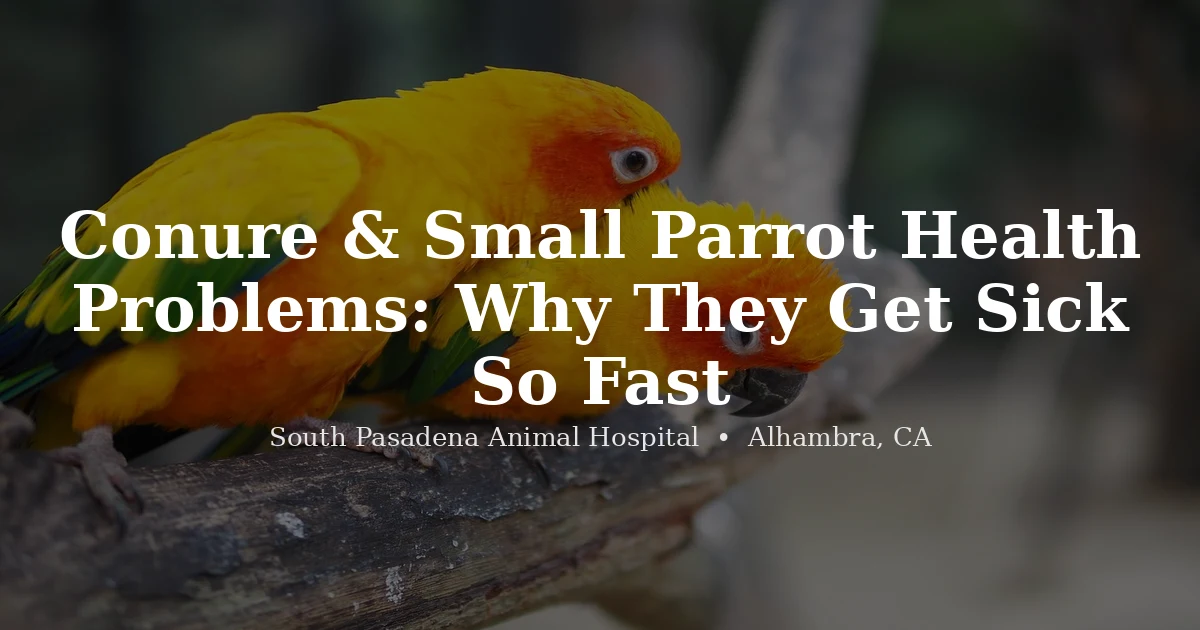
Conures and small parrots — sun conures, green-cheeked conures, cockatiels, lovebirds, parakeets — are some of the most personality-packed pets you can own. They're loud, funny, attached to their people, and genuinely smart. They're also really good at hiding when something's wrong, and that's the part that catches owners off guard.
Here's the honest version of what we tell new bird owners: a conure can look completely fine on Tuesday and be in critical condition by Thursday. Not because the illness appeared overnight — it didn't — but because the bird kept masking it until its body simply couldn't compensate any longer. We've had owners come in stunned that their "totally normal" bird from two days ago is suddenly this sick. It's one of the hardest parts of avian medicine, and one of the most important things for an owner to understand early.
The Most Common Health Problems in Conures and Small Parrots
Fatty Liver Disease (Hepatic Lipidosis)
This is one of the most common problems we see in companion birds fed a seed-heavy diet — and seed mixes are still what a lot of pet stores sell as the "normal" diet, which doesn't help. Seeds are high in fat and low in the balanced nutrition birds actually need. Over time, the liver starts storing excess fat, and its function declines.
Early on, the signs are subtle: a bird that seems a little duller than usual, slightly overweight, with droppings that look different than normal. As it progresses, you may notice an overgrown or oddly shaped beak, overgrown nails, lethargy, and labored breathing — the liver affects far more than digestion. Catching it early, while diet changes and supportive care can still make a real difference, beats catching it once the bird is showing obvious symptoms.
The fix starts with diet: a pelleted formula as the foundation, with vegetables and fruit in moderation, and seeds treated as an occasional treat rather than a meal. If your bird's diet is mostly seed right now, that transition is worth doing carefully — talk to your vet about how to do it without your bird simply refusing to eat the new food.
Respiratory Infections
Birds have an incredibly efficient respiratory system — which also means respiratory problems can become serious quickly. Infections can be bacterial, fungal (aspergillosis is one we watch for, especially in birds kept in damp or poorly ventilated spaces), or related to environmental irritants like smoke, aerosols, or certain non-stick cookware fumes.
Signs include tail bobbing with each breath, open-mouth breathing, audible clicking or wheezing, discharge from the nares (nostrils) or eyes, sneezing, and a change in voice or vocalization. A conure that's gone quiet, or whose normally bright chatter has turned into raspy or strained sounds, needs to be seen.
Tail bobbing with breathing is an emergency sign. If you see your bird's tail pumping up and down with each breath, or it's breathing with an open beak while at rest, that bird needs to be seen the same day — not tomorrow. Respiratory distress in small birds can deteriorate within hours. Call (626) 441-1314 immediately.
Feather Picking and Plucking
Few things worry bird owners more than watching their bird pull out its own feathers — and few things are harder to diagnose from the outside, because the causes split into two very different buckets that can look identical.
Behavioral causes include boredom, stress, a change in the household, lack of sleep, or not enough social interaction. Medical causes include skin infections, external parasites, allergies, hormonal cycling, and — this is the one that worries us most — pain from an internal problem the bird is hiding everywhere else. We've seen feather picking turn out to be the only visible sign of something going on internally that the bird wasn't showing any other way.
This is exactly why we don't recommend guessing at home. A vet exam (sometimes including bloodwork or skin testing) sorts out which category you're dealing with — and trying random fixes in the meantime can waste the weeks that actually matter.
Egg Binding (in Females)
Egg binding happens when a hen can't pass an egg through the reproductive tract — and it is genuinely an emergency. It's more common in birds that are reproductively active, malnourished (especially calcium-deficient), overweight, or kept in conditions that trigger excess egg-laying.
Watch for: straining, a fluffed-up and miserable-looking bird, sitting low on the cage floor, tail bobbing, lethargy, and a swollen abdomen. A hen showing these signs needs to be seen immediately — egg binding can become life-threatening within hours if the egg isn't passed or removed.
Egg binding is a same-day emergency. A female bird straining, fluffed up, and sitting on the cage floor needs veterinary attention right away. Don't wait to see if she "works it out" on her own — call (626) 441-1314 immediately.
Beak and Nail Overgrowth
A healthy bird wears its beak and nails down naturally through normal activity — chewing, climbing, foraging. When you notice rapid or unusual overgrowth, it's not always just a grooming issue. It can point to liver disease, malnutrition, or an underlying illness affecting the bird's metabolism. This is part of why we like to examine the whole bird rather than just trim and send it home — the overgrowth itself might be a clue pointing somewhere else.
Sun Conures: What Makes Them Different
Sun conures are one of the most popular conure species we see, and for good reason — that bright orange, yellow, and green plumage and big personality make them irresistible. But a few things set sun conures apart when it comes to health.
They're loud. Really loud, even by conure standards. That's normal sun conure behavior, not a health problem on its own — but a sudden change in vocalization (going quiet, or screaming far more than usual) is worth paying attention to. Sun conures are also prone to feather picking and plucking, often tied to stress, boredom, or an underlying skin or hormonal issue, so don't assume it's "just behavioral" without ruling out a medical cause first.
Like other conures, sun conures can carry psittacine beak and feather disease (PBFD) and polyomavirus, and they're susceptible to the same respiratory and digestive issues covered above. Because they're so social and food-motivated, a sun conure that suddenly stops begging for food, gets quiet, or stops climbing around the cage is often telling you something is wrong well before it looks "sick."
Why Birds Get Sick So Fast — and Hide It So Well
In the wild, a bird that looks sick gets picked off by a predator or pushed out of the flock. That instinct to mask illness didn't go away just because your conure lives in a cage in your living room — it's still completely hardwired. A bird will often keep eating, perching, and acting normal right up until its body can no longer compensate, and then the decline can happen within a day or two.
This is why we tell owners: don't wait for "obviously sick." Watch for the small stuff — a bird that's quieter than usual, fluffed up when it's not cold, sitting lower on the perch, eating less, or producing different-looking droppings. Those subtle shifts are often the only warning you'll get before things move quickly. Trust that instinct that something seems "off," even if you can't quite say what.
Husbandry Basics That Prevent Most Problems
- Diet: A pelleted base diet with vegetables and limited fruit; treat seeds as an occasional extra, not the main meal. This single change prevents more problems than almost anything else on this list.
- Air quality: Birds have extremely sensitive respiratory systems. Never use non-stick (PTFE/Teflon) cookware near birds — overheated coatings release fumes that are rapidly fatal to them. Avoid aerosols, candles, smoke, and strong cleaning fumes in the same room.
- Lighting and environment: Consistent daylight hours (roughly 10–12 hours), a draft-free location, and stable temperatures support both physical and behavioral health.
- Mental stimulation: Conures and small parrots are intelligent and social. Toys, foraging opportunities, and daily interaction reduce stress-related issues, including some forms of feather picking.
- Routine exams: Because birds mask illness so well, a baseline wellness exam — even when your bird seems perfectly fine — gives your vet a reference point for what's normal for your individual bird.
When to See a Vet
- Tail bobbing with breathing, open-mouth breathing, or audible respiratory sounds — same-day emergency
- A female bird straining, fluffed up, and sitting on the cage floor — same-day emergency
- Fluffed-up posture when it's not cold, or sitting low/quiet for more than a few hours
- Reduced or absent appetite, or a noticeable change in droppings
- New or worsening feather picking or plucking
- Discharge from the eyes or nares, sneezing, or a change in voice
- Rapid beak or nail overgrowth
- Any sudden behavior change — quietness from a normally vocal bird, or a normally active bird that's gone still
If you're ever unsure whether something is "enough" to call about — call anyway. With birds, the cost of waiting tends to be much higher than the cost of a phone call that turns out to be nothing.
We see conures, parrots, cockatiels, parakeets, and other companion birds at South Pasadena Animal Hospital in Alhambra, serving the San Gabriel Valley. To schedule an appointment, call (626) 441-1314 or book online. Appointments are required. Pet owners near South Pasadena are just over the border from our location.
Frequently Asked Questions About Conure and Small Parrot Health
What are the most common health problems in conures and small parrots?
The issues we see most often are fatty liver disease related to seed-heavy diets, respiratory infections, feather picking or plucking, egg binding in females, and beak or nail overgrowth that can sometimes point to an underlying liver or nutritional problem. Many of these share early signs — quietness, fluffed-up posture, reduced appetite — which is part of why they're easy to miss until they're advanced.
Why do birds get sick so fast compared to other pets?
Birds are prey animals, and in the wild, looking sick makes you a target. That instinct to mask illness is still hardwired into pet birds. A conure or small parrot will often act completely normal right up until it can't compensate anymore — and at that point, decline can happen within 24 to 48 hours. That's why subtle changes matter so much, and why "let's wait and see" can cost real time.
What are the warning signs that my conure or parrot is sick?
Fluffed-up feathers when it's not cold, sitting low on the perch or cage floor, reduced or absent appetite, changes in droppings, tail bobbing with each breath, discharge from the nares or eyes, a change in vocalization, sudden quietness from a normally chatty bird, and any new feather picking. Birds don't show casual symptoms the way dogs and cats sometimes do — any one of these is worth paying attention to.
Is feather picking always a medical problem?
Not always. It can be behavioral — boredom, stress, lack of sleep, a change at home — or medical, including skin infections, parasites, allergies, hormonal cycling, or pain from an internal issue the bird is otherwise hiding well. Because the two can look identical from the outside and sometimes overlap, a vet exam is really the only reliable way to tell them apart. Guessing at home tends to burn the time that would've helped most.
Does SPAH treat conures and parrots in Alhambra?
Yes. South Pasadena Animal Hospital sees conures, parrots, cockatiels, parakeets, and other companion birds at our Alhambra location, 3116 W Main St, Alhambra, CA 91801. Call (626) 441-1314 or book online to schedule an appointment.