May 5, 2026 · 7 min read
Why Is My Red-Eared Slider Not Eating? Causes & When to See a Vet
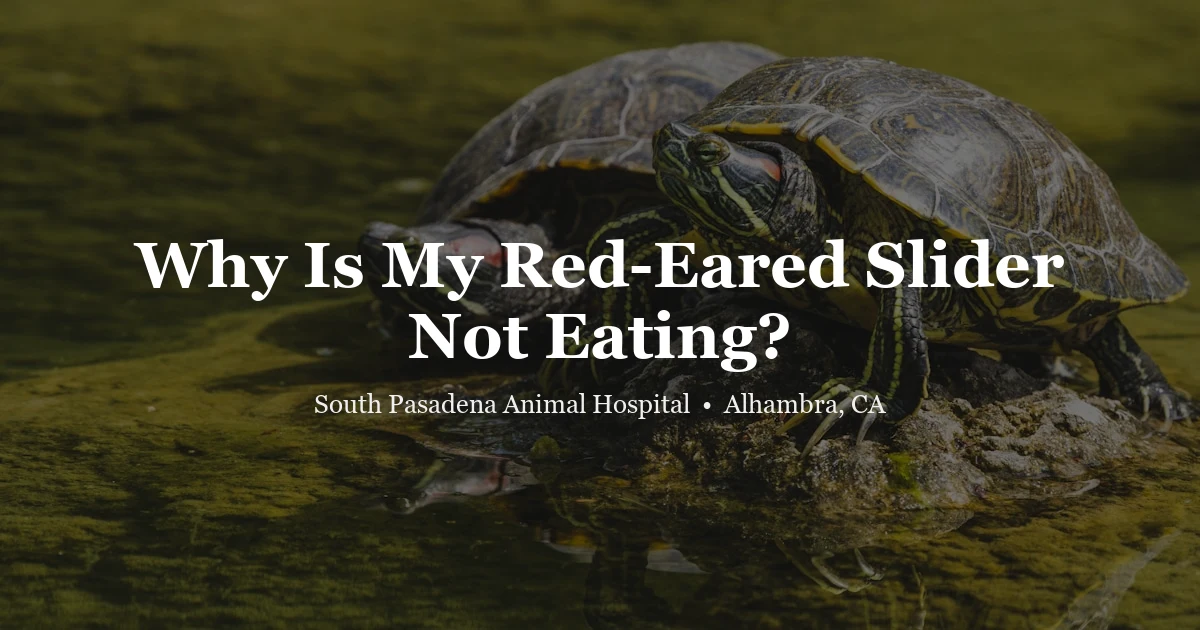
Red-eared sliders are one of the most popular pet turtles in the country, and "my turtle stopped eating" is one of the most common questions we hear at our clinic in Alhambra. The good news: a slider going off food is not automatically an emergency. The tricky part is knowing when it's a passing phase — and when something is genuinely wrong.
Here's what's usually going on, what to check at home, and when it's time to call a vet.
First, Is This Normal Fasting?
Red-eared sliders naturally eat less — or stop eating entirely — during certain periods. Before assuming something is wrong, consider:
A few situations where not eating is normal and not a concern: brumation (the reptile version of hibernation) typically starts in October and runs through March in California; a healthy slider in brumation still moves occasionally and responds to handling, just slowly. A recent tank change or rearrangement can cause a stress response that suppresses appetite for one to two weeks — give them time to settle. Sliders sometimes eat less during scute shedding. And if you recently switched food types, they can be surprisingly stubborn about new offerings.
If your slider is in one of these situations — behaving otherwise normally, active in warm water, and basking regularly — a brief fast may not be cause for alarm. Monitor them closely over the next one to two weeks.
Common Reasons Red-Eared Sliders Stop Eating
When normal seasonal fasting is ruled out, these are the most frequent culprits:
The number-one thing we check first
This is the number-one thing to check. Red-eared sliders are ectotherms — their body temperature depends on their environment. Water that's too cold (below 72°F) slows their metabolism so dramatically that digestion essentially stops. They won't eat because they literally can't process food. Target water temperature: 75–80°F (24–27°C). Use a submersible aquarium thermometer, not a guess.
A bulb that looks fine can be doing nothing
Sliders need to bask to warm up, digest food, and synthesize vitamin D3. If the basking spot doesn't reach 85–90°F (29–32°C), they won't thermoregulate properly. A combination of a basking bulb and UVB lamp positioned correctly over a dry platform is essential. If the bulb has been running for more than six months, the UVB output may have declined significantly even if the light still looks on — UVB bulbs need replacement on schedule.
Turtles are messy, and dirty water shows up as a lost appetite
Turtles are messy. High ammonia or nitrite levels from an undersized filter, infrequent water changes, or overfeeding make the water toxic and stress the turtle's immune system. A stressed turtle in poor-quality water will often stop eating well before you see other signs. Test your water with an aquarium test kit and change 25–30% of the water weekly.
Sometimes it's the environment, not an illness
Frequent handling, an aggressive tankmate, vibrations from nearby speakers or foot traffic, a tank placed in a high-traffic area, or even a sudden change in the household (new pet, new baby, rearranged furniture) can all stress a slider enough to suppress eating. Turtles generally do best with minimal daily handling and a calm, predictable environment.
The illness we see most often in sliders that stop eating
This is the illness we see most often in sliders that stop eating. Signs include wheezing or clicking sounds when breathing, mucus or bubbling around the nose or mouth, open-mouth breathing, and tilting to one side in the water (a turtle with fluid in one lung will float unevenly). Respiratory infections in turtles require veterinary treatment — they do not resolve on their own.
Swollen eyelids that make it hard to even see food
This is surprisingly common, especially in sliders fed primarily pellets without fresh leafy greens. Signs include swollen, puffy, or partially closed eyelids (so-called "vitamin A eyes"), and turtles often stop eating because the eye swelling makes it hard to see prey. Treatment involves vitamin A supplementation, which a vet can provide safely — oral or injectable, depending on severity.
Common in recently wild-caught or crowded-origin sliders
Parasites are common in sliders, particularly those that were recently wild-caught or came from crowded conditions. A fecal exam at the vet is the only reliable way to identify them.
Warning Signs That Mean Call a Vet Now
Some combinations of symptoms indicate a more urgent problem. Call us if your slider hasn't eaten for more than three weeks outside the October to March brumation window, shows wheezing, clicking, mucus, or open-mouth breathing, has swollen or crusted eyelids, floats consistently on one side or bobs unevenly, has a soft, discolored, or foul-smelling shell, has visibly lost weight over time, or seems completely lethargic even in warm water.
A turtle that is lethargic, not eating, AND not basking is a turtle in trouble. Sliders that are simply in brumation will still bask when warmed — a truly sick turtle often won't.
What to Try at Home First
Before calling the vet, do a quick environmental audit. Measure water temperature with a reliable thermometer rather than guessing, and check the basking spot with an infrared thermometer too. Test the water for ammonia, nitrite, nitrate, and pH. Check when the UVB bulb was last replaced. Try offering a variety of foods — feeder fish, earthworms, romaine lettuce, dandelion greens, or a different pellet brand. And reduce handling, minimizing environmental disruption for a week or two.
If temperatures and water quality are correct, you've tried varied foods, and the turtle still won't eat after two to three weeks — or if any warning signs above are present — it's time to see a reptile vet.
Frequently Asked Questions
How long can a red-eared slider go without eating?
A healthy adult slider can fast for several weeks during brumation without harm. Outside of brumation, more than 2–3 weeks of complete food refusal — especially paired with lethargy or other symptoms — warrants a vet visit. Young sliders (under 1 year) have less reserves and should be evaluated sooner if they stop eating.
Why won't my red-eared slider eat pellets?
Sliders often tire of pellets, especially if that's all they've been offered. Try adding variety: feeder fish, earthworms, freeze-dried shrimp, romaine or red-leaf lettuce, dandelion greens, or aquatic plants. Pellets should be a supplement, not the entire diet. If appetite doesn't improve after offering variety and confirming correct temperatures, a vet check is appropriate.
What temperature should the tank be?
Water: 75–80°F. Basking area: 85–90°F. These aren't suggestions — sliders literally cannot digest food properly outside this range. Get a digital thermometer for both zones.
What are signs my red-eared slider is sick?
Key warning signs: not eating for 3+ weeks outside brumation; wheezing or bubbling from the nose or mouth; swollen or closed eyes; floating unevenly in water; soft or discolored shell; significant lethargy even in warm conditions.
Can I find a turtle vet near Alhambra or South Pasadena?
Yes — we see red-eared sliders and other aquatic turtles at South Pasadena Animal Hospital in Alhambra. Call (626) 441-1314 or book online.